
 Contact
Choosing the right nylon material is not only about selecting the strongest grade. It is about balancing mechanical performance, processability, cost, environmental exposure, and long-term dimensional stability.
From PA6 and PA66 to PA12 and reinforced nylon composites, each nylon material behaves differently depending on the application, operating environment, and design requirements. This is why nylon is widely used across automotive, electronics, industrial equipment, precision components, and structural applications.
In this nylon material selection guide, we will walk you through how to choose the right nylon material — backed not just by decades of expertise, but also the continuous progress backed by data.
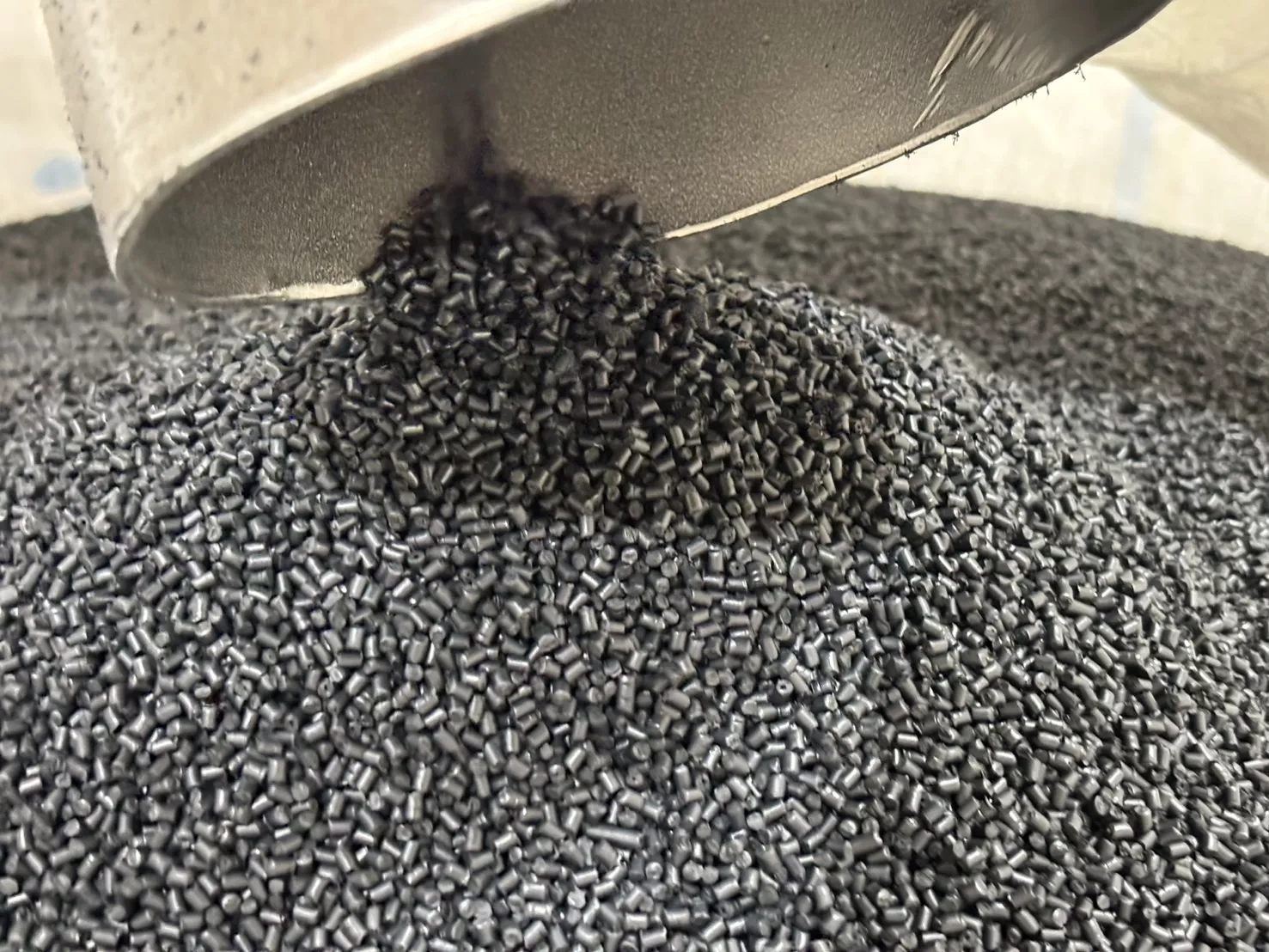
How to Choose the Right Nylon Material
Selecting the right nylon material becomes much easier when you evaluate four key factors:
- Mechanical requirements
- Environmental exposure
- Processing method
- Cost-performance balance
By understanding how these factors interact, engineers can identify the most suitable material for their specific application.
For a step-by-step material selection framework, see: How to Choose the Right Nylon Compound.
What is Nylon (Polyamide)?
Nylon, also known as polyamide (PA), is one of the most versatile engineering plastics. It offers an excellent balance of mechanical strength, wear resistance, and thermal performance, making it widely used in automotive, electronics, industrial equipment, and structural applications.
One of nylon's key advantages is its flexibility in formulation. By adjusting reinforcement systems and additives, nylon can be optimized for higher strength, improved impact resistance, better dimensional stability, or enhanced processability.
To learn more about specific nylon materials and their applications, explore:
- What Is PA66? Understanding Nylon 66 and Its Engineering Applications
- 10 Insights on PA6 (Nylon 6)
- What Is PA12? Low-Moisture Nylon for Precision Applications
- Types of Plastic Raw Materials: Engineering Plastics Overview
Types of Commonly Used Nylon Materials: PA6, PA66, and PA12
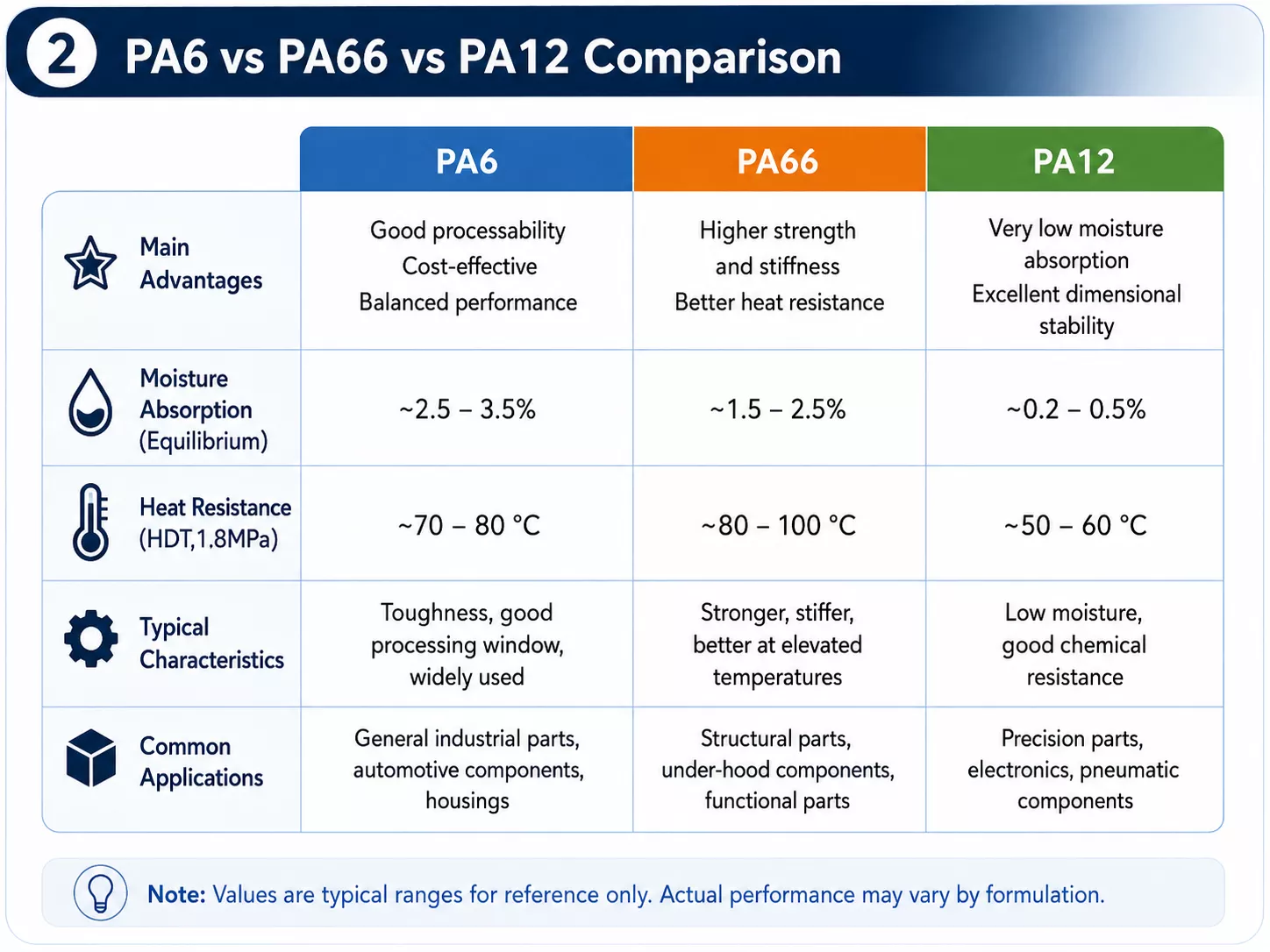
Selecting the right nylon material starts with understanding the differences between the three most commonly used grades. Each offers a different balance of mechanical performance, moisture resistance, and cost, making them suitable for different engineering applications.
PA6 (Nylon 6)
PA6 is widely used for its excellent processability and cost-effectiveness. It offers a balanced combination of strength and toughness, making it suitable for a wide range of general-purpose injection molding applications.
Because PA6 absorbs more moisture than other nylon materials, its dimensions may change over time in humid environments. However, this moisture conditioning can also improve impact resistance.
Explore our PA6 Nylon Compounds for injection molding applications.
PA66 (Nylon 66)
PA66 provides higher strength, stiffness, and heat resistance than PA6, along with lower moisture absorption. These characteristics make it a popular choice for structural and high-temperature applications in automotive and industrial components.
It is commonly selected when greater mechanical performance and dimensional stability are required.
Explore our PA66 Engineering Nylon Compounds for demanding applications.
PA12
PA12 is designed for applications requiring very low moisture absorption and excellent dimensional stability. It performs particularly well in humid environments and is often used in precision components, electronic parts, and specialty industrial applications.
Compared with PA6 and PA66, PA12 generally has a higher material cost and lower tensile strength. However, its long-term stability makes it a preferred choice when dimensional consistency is critical.
Explore our PA12 Nylon Materials for low-moisture and precision applications.
| Material | Main Advantage | Key Consideration |
|---|---|---|
| PA6 | Good processability | Higher moisture absorption |
| PA66 | Higher strength and heat resistance | Higher cost than PA6 |
| PA12 | Low moisture absorption | Higher material cost |
Comparing Nylon Materials in Real Applications
While individual properties are important, material selection in real applications often comes down to comparing performance under actual operating conditions.
Engineers typically evaluate differences in strength, moisture behavior, thermal resistance, and processing characteristics. A deeper understanding of how PA6, PA66, and PA12 perform in these areas can help identify the most suitable material for your application.
Quick Reference: Nylon Material Benchmarks
In engineering practice, material selection often starts with a few key performance indicators:
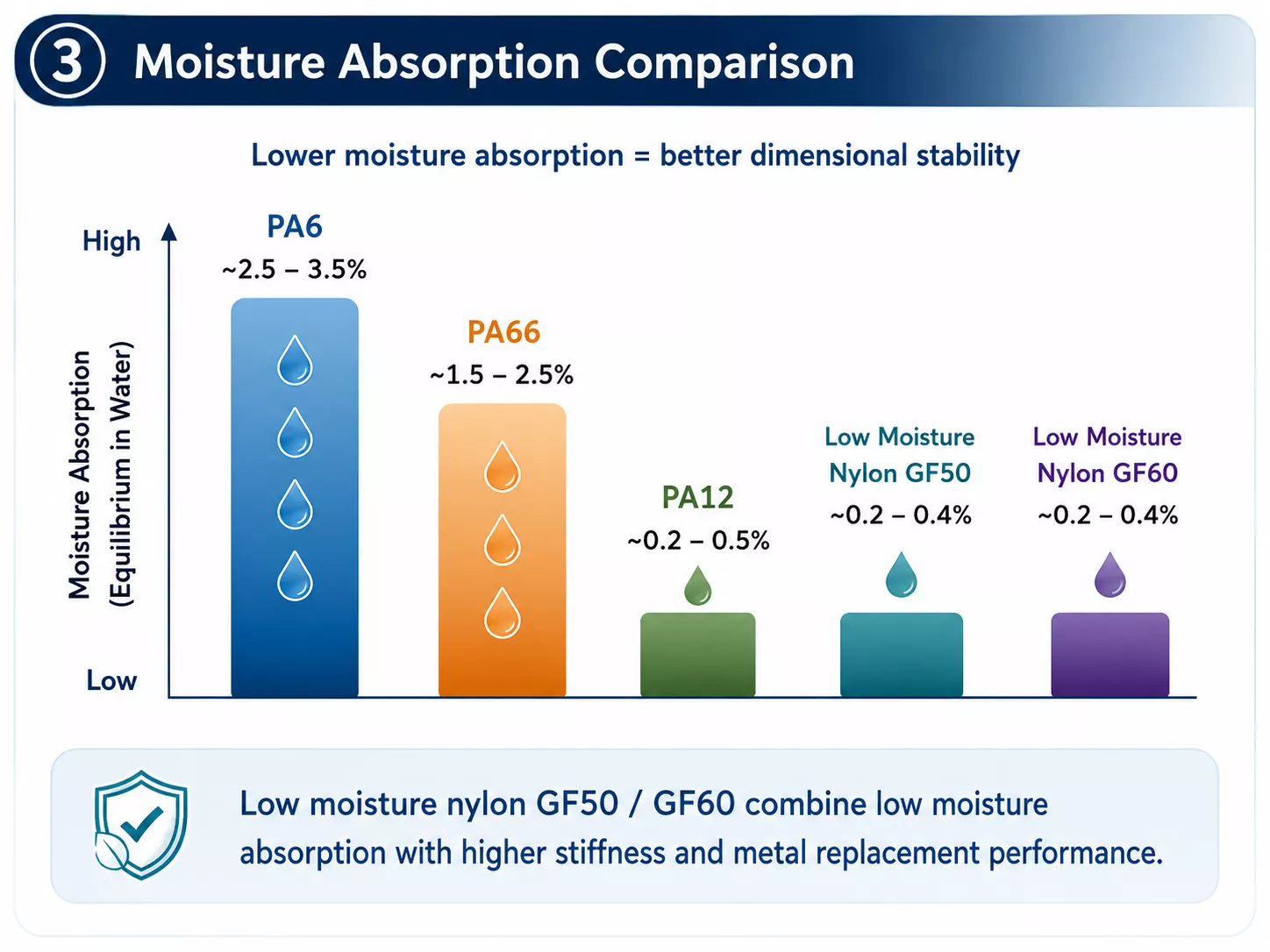
- Moisture absorption
PA6: ~2.5–3.5%
PA66: ~1.5–2.5%
PA12: ~0.2–0.5%
- Glass fiber reinforcement
GF30 → balanced strength and processability
GF50 → higher stiffness and metal replacement potential - Impact performance
Standard nylon: ~5–11 kJ/m²
Modified systems: up to 100+ kJ/m²
For deeper comparisons, you may refer to our material comparison guides covering PA6 vs PA66, PA6 vs PA12, and PA66 vs PA12.
Reinforced Nylon: Glass Fiber, Carbon Fiber, and Hybrid Systems
In most engineering applications, unfilled nylon is rarely used on its own. Reinforcement plays a critical role in achieving the required mechanical and thermal performance.
Glass Fiber Reinforced Nylon (PA GF)
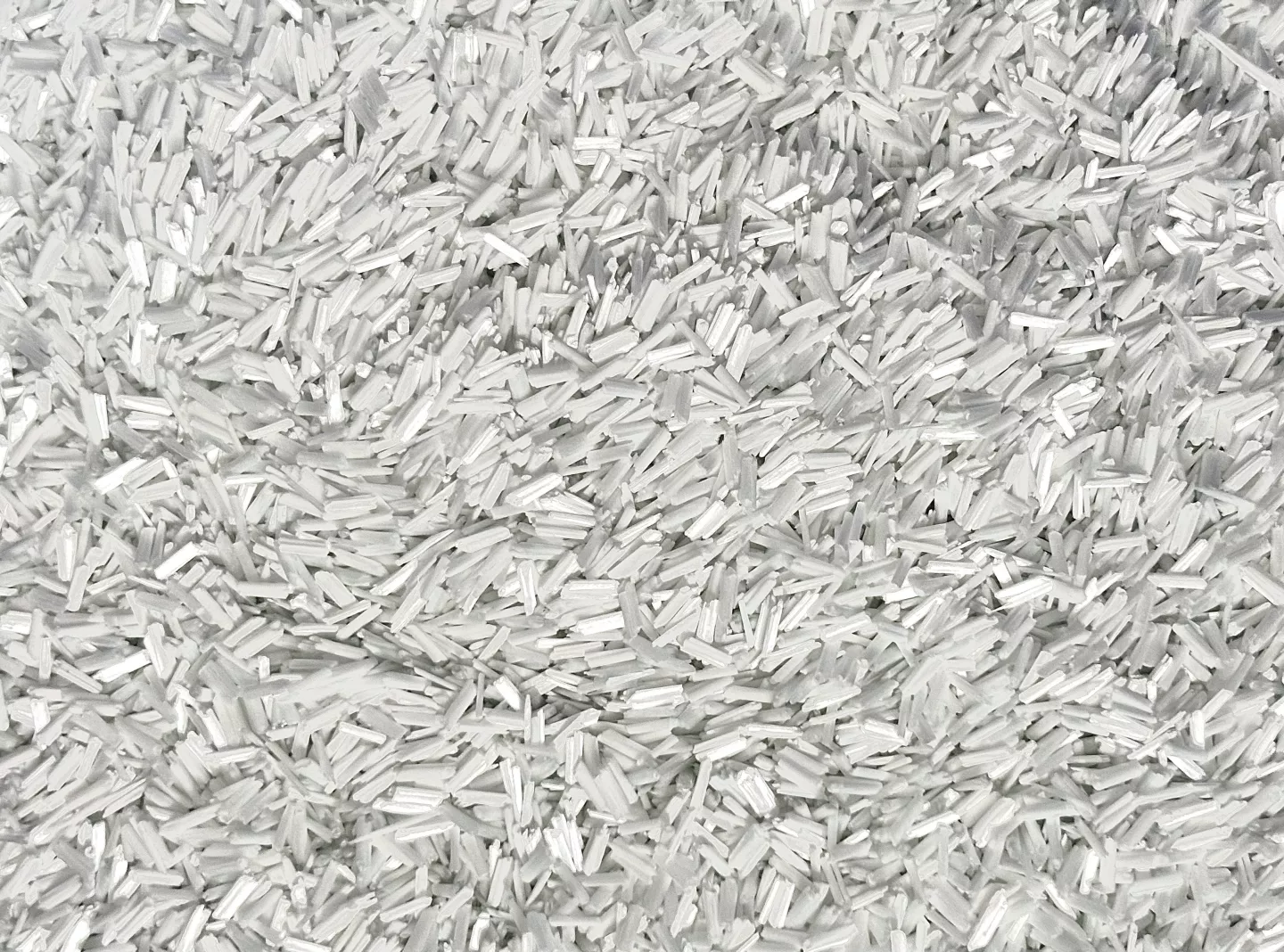
Glass fiber reinforced nylon significantly improves stiffness, tensile strength, flexural strength, and dimensional stability. It also helps reduce shrinkage during molding, making it suitable for office furniture, metal replacement components such as hand tools, and automotive components.
Carbon Fiber Reinforced Nylon
Carbon fiber reinforced nylon offers higher stiffness and lower weight than glass fiber systems. It is typically selected for premium applications where lightweight design and structural efficiency are critical.
To better understand the differences between reinforcement systems, see PA GF vs PA CF: Glass Fiber vs Carbon Fiber Reinforced Nylon.
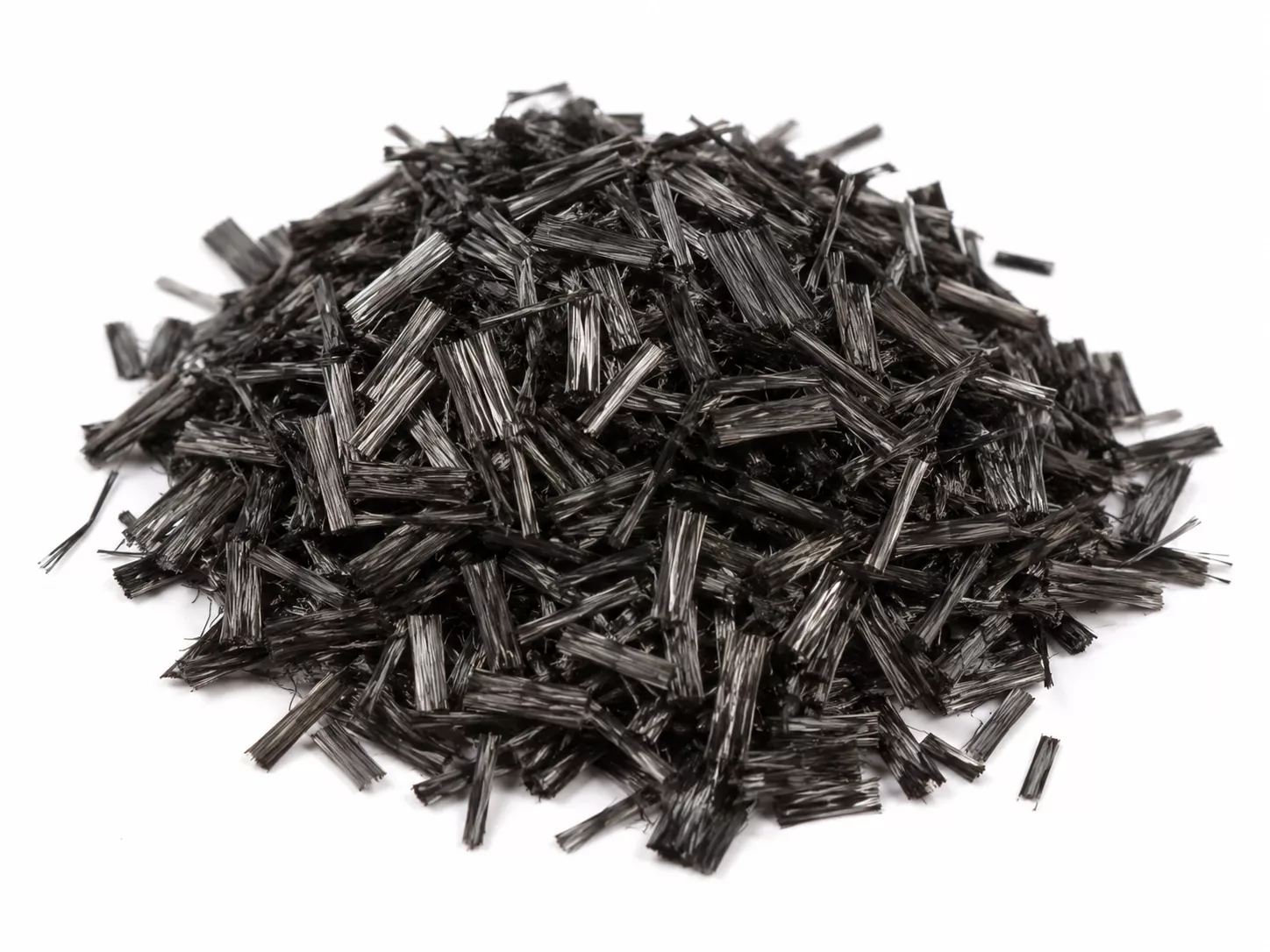
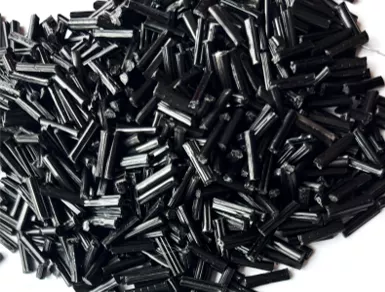
Long Fiber vs Short Fiber Nylon
Fiber length also plays an important role in performance. Long fiber reinforced nylon generally provides better impact resistance and structural integrity, while short fiber nylon offers improved flow characteristics and surface finish.
Learn more in Long Fiber vs Short Fiber Nylon: LCF vs LGF vs Conventional Reinforcement.
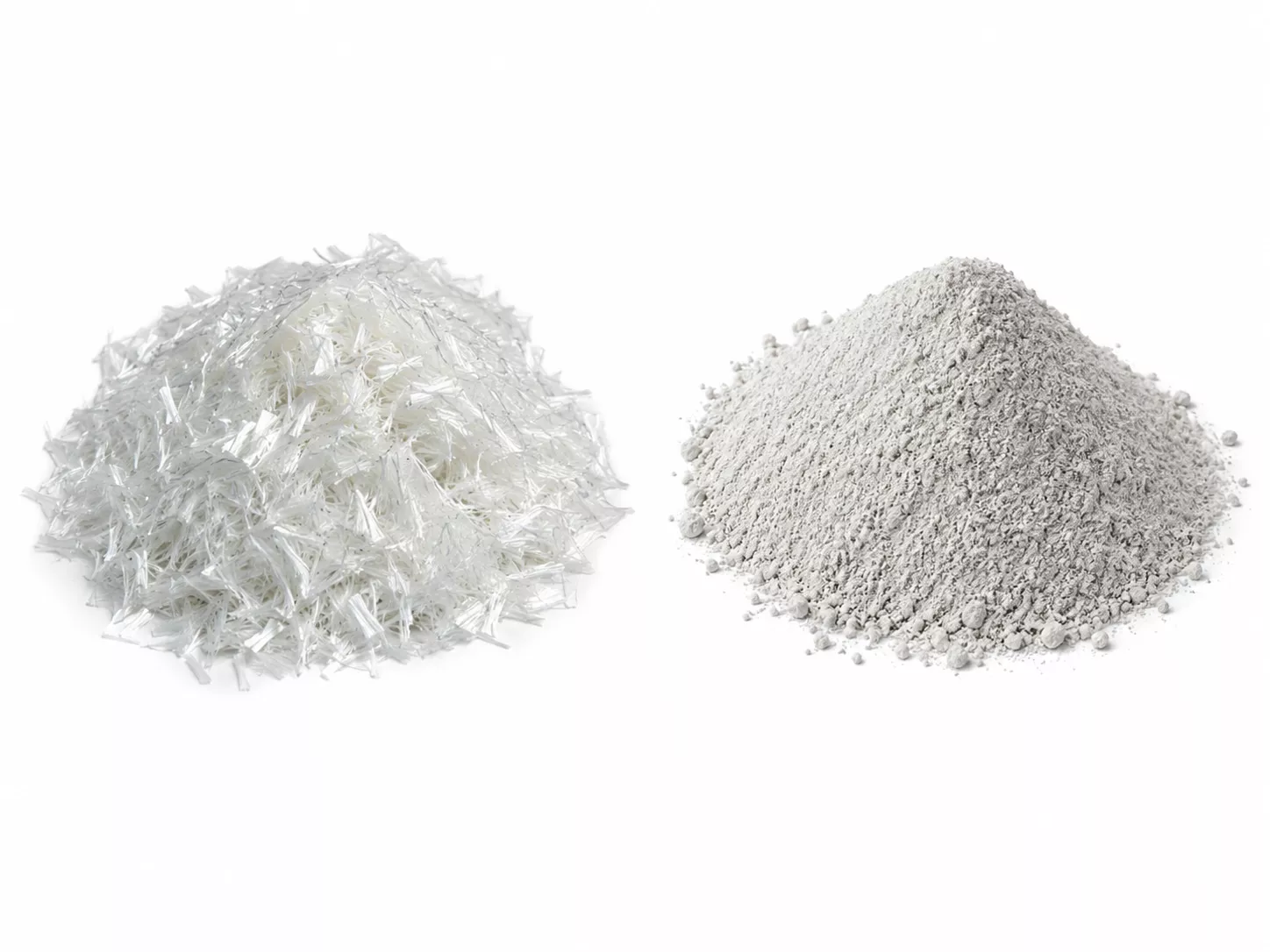
Hybrid Reinforcement Systems (GF + Mineral)
Combining glass fiber with mineral fillers helps improve dimensional stability, reduce warpage, and enhance heat resistance, especially in large or flat components where appearance and dimensional control are critical.
Learn more in PA GF + Mineral Fillers: Reducing Warpage and Improving Stability.
Mechanical Performance vs Design Requirements
Choosing the right nylon material is not about selecting the strongest option, but about finding the optimal balance between strength, impact resistance, flexibility, dimensional stability, and cost.
When evaluating material alternatives, it is important to compare not only mechanical properties, but also moisture absorption, processing behavior, and long-term performance in real applications.
For a broader comparison of nylon against other engineering plastics, see:
- PA vs POM: Comparing Strength, Wear Resistance, and Dimensional Stability
- PA vs PPO: Heat Resistance and Electrical Performance Comparison
- PBT vs PA
- PA vs PP
Processing Considerations for Nylon Materials
Material selection should always consider processing conditions.
Nylon materials are sensitive to moisture, and improper drying can significantly affect performance and surface appearance. Shrinkage and warpage are also common challenges, especially in impact-modified PA systems.
In many cases, part failures are not caused by material selection alone, but by the interaction between nylon behavior and processing conditions such as drying, mold design, cooling, and fiber orientation.
To better understand common molding challenges and optimization strategies, see:
- Glass-Filled Nylon Injection Molding Guide
- How to Reduce Nylon Warpage and Shrinkage
- Impact-Modified Nylon for Injection Molding
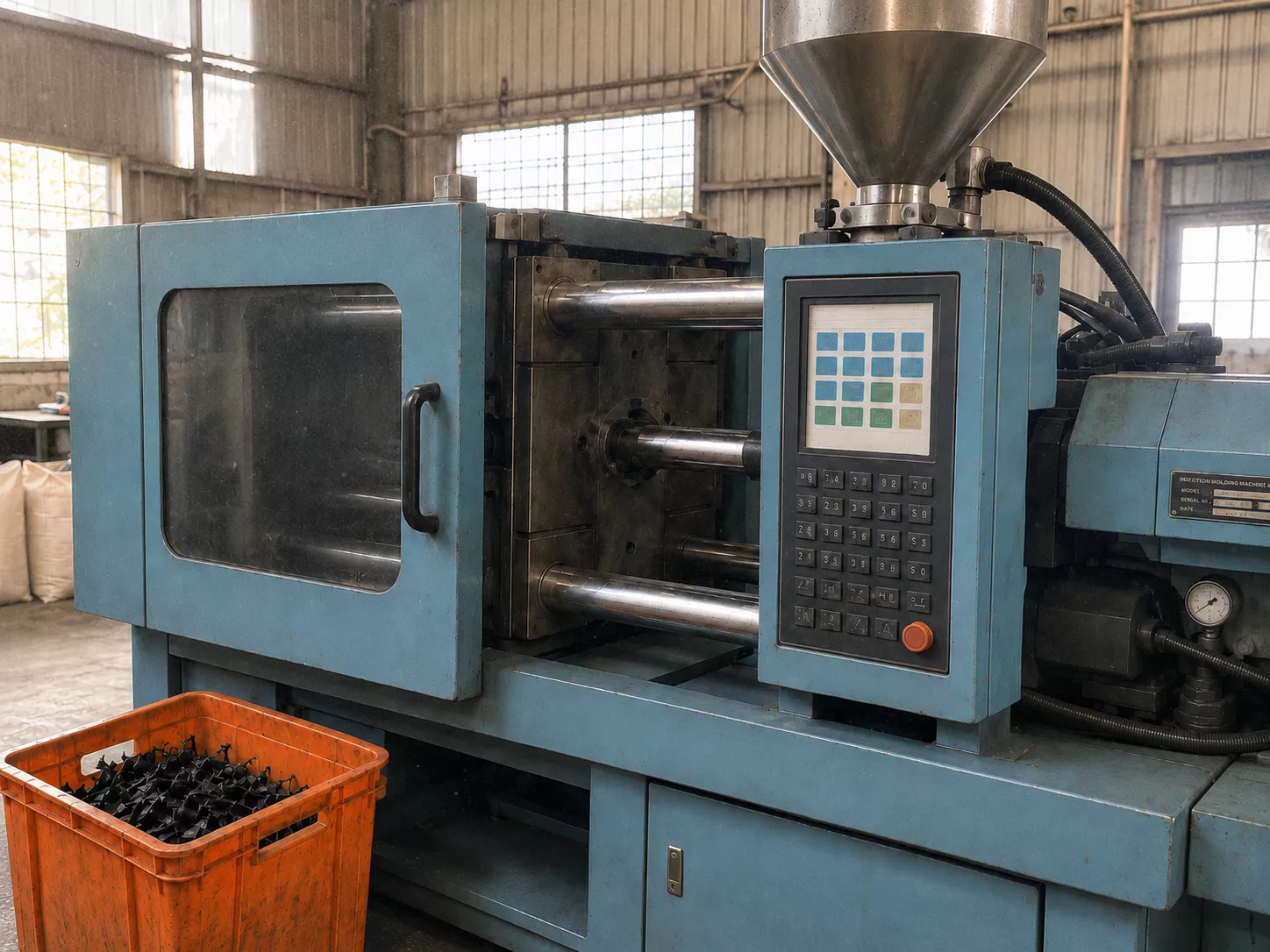
Application-Based Nylon Selection
Automotive and Structural Components
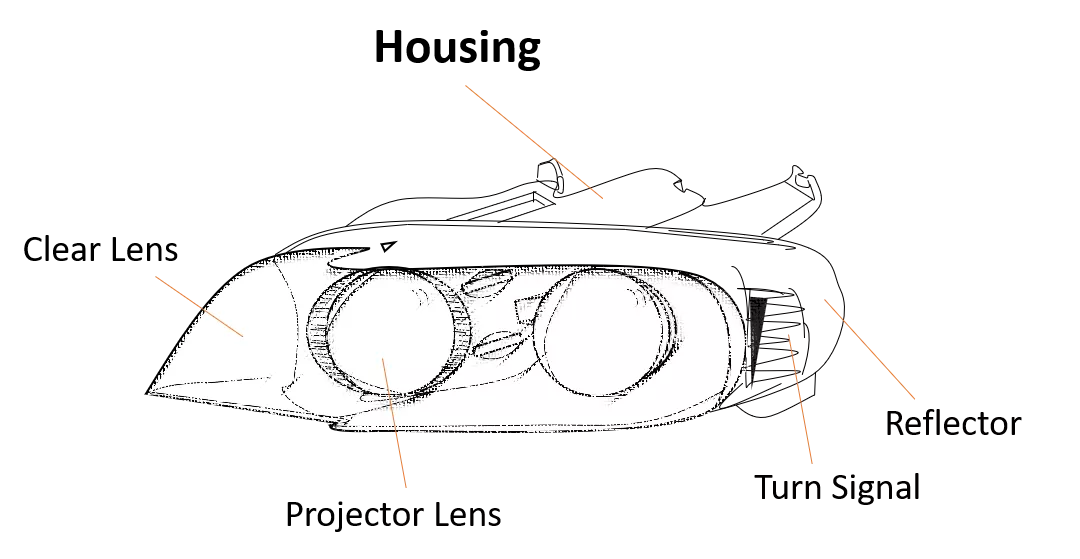
In automotive applications, material selection often involves more than simply choosing a glass fiber reinforced nylon. While PA66 GF is widely used for structural components, many parts require a balance between stiffness, surface quality, dimensional stability, and warpage control.
For example, in headlight housing applications, mineral-filled nylon is often preferred over glass fiber reinforced grades because it provides better surface appearance and improved dimensional consistency.
To see how nylon materials are used in real automotive applications, including lighting systems and structural components, explore Car Headlight Housing Materials. You can also review our PA6 Nylon Compounds and PA66 Engineering Nylon Compounds for automotive and structural applications.
Precision and Low Moisture Applications
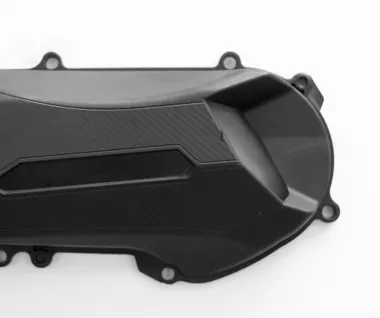
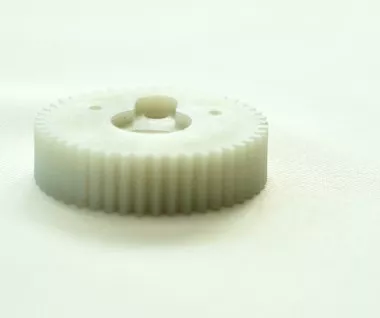
Applications such as electronic components and precision parts, including metal replacement components, require materials with low moisture absorption to maintain dimensional accuracy over time.
Depending on the design requirement, PA12 GF30 may be selected for applications requiring low moisture absorption and dimensional stability, while low moisture nylon GF50 or low moisture nylon GF60 may be considered when higher stiffness, structural strength, and metal replacement performance are required.
You can also review our PA12 Nylon Materials for low-moisture and dimension-critical applications.
Impact-Resistant Applications
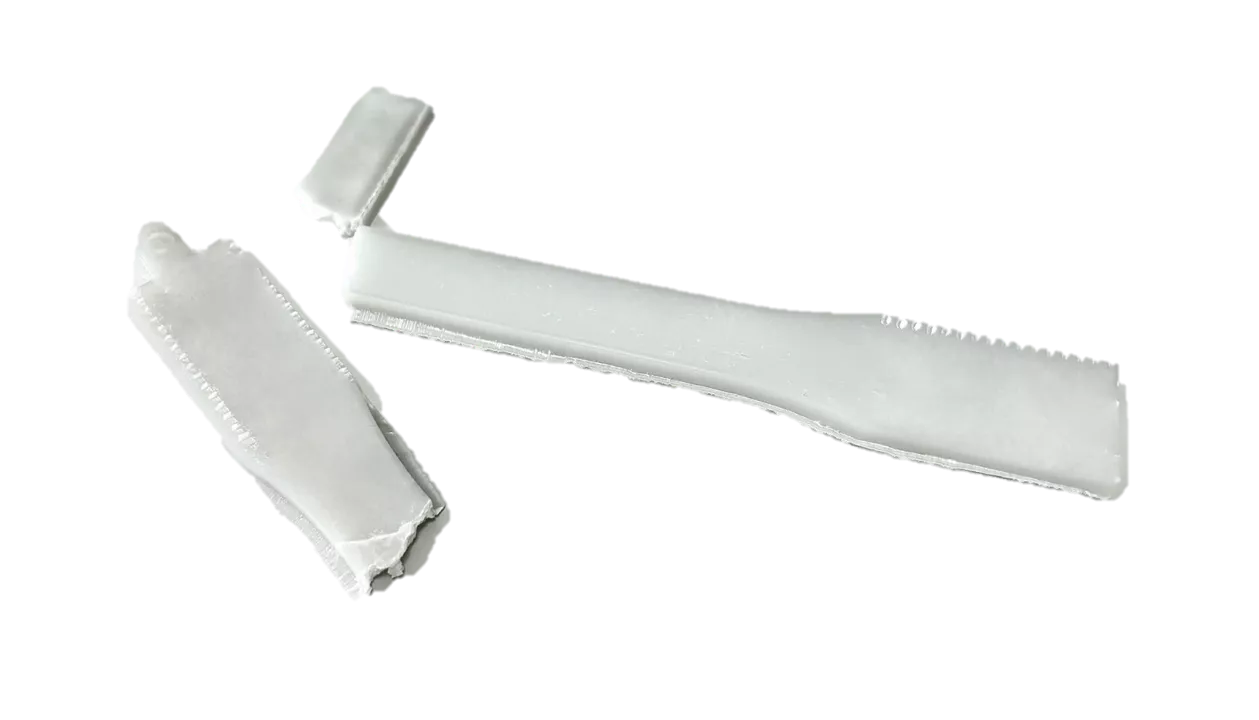
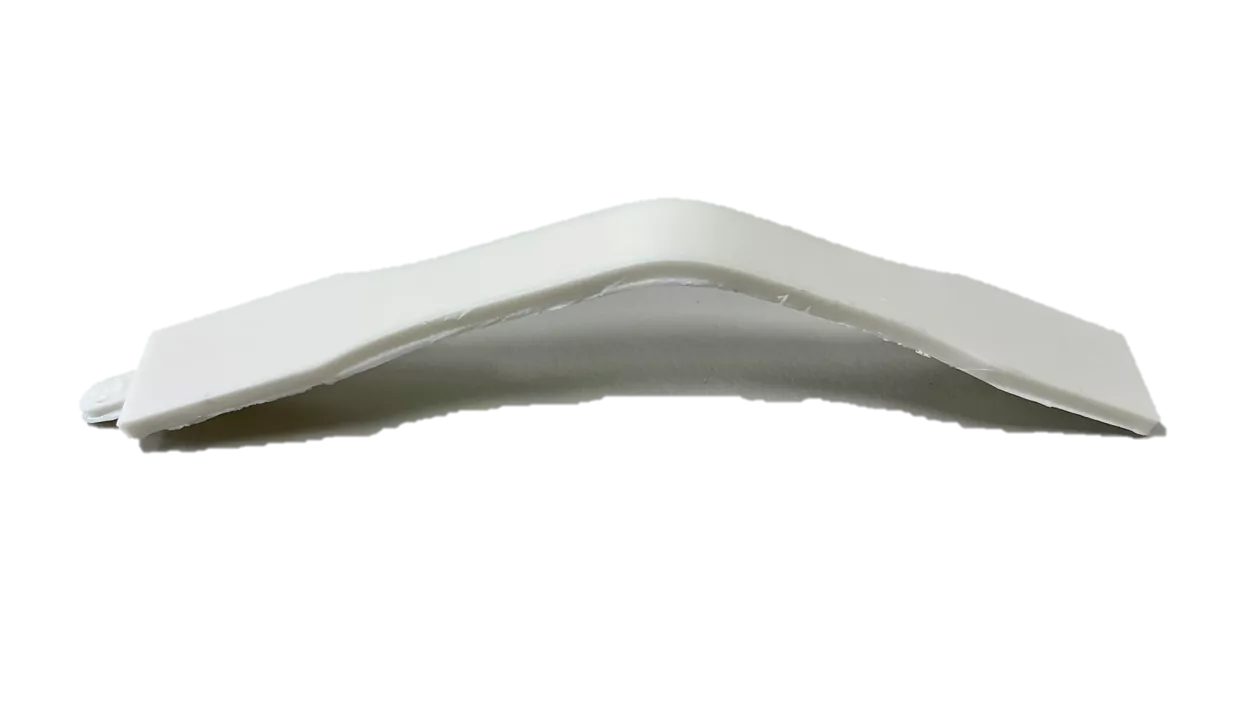
In applications exposed to vibration, repeated stress, or sudden impact, toughness often becomes more important than stiffness alone. These applications typically require specially formulated nylon systems designed to improve energy absorption and reduce crack propagation.
For applications where higher toughness is required, impact performance is typically enhanced through material formulation rather than base polymer selection alone.
A common approach is the use of elastomer-based modifiers to improve energy absorption and crack resistance. Learn more about ENZ Nylon Impact Modifier Solutions for improving toughness and long-term durability in nylon compounds.
You may also explore:
- Impact-Modified Nylon with Glass Fiber Reinforcement
- Impact-Modified Nylon for Injection Molding Applications
Sustainable and Recycled Nylon Solutions
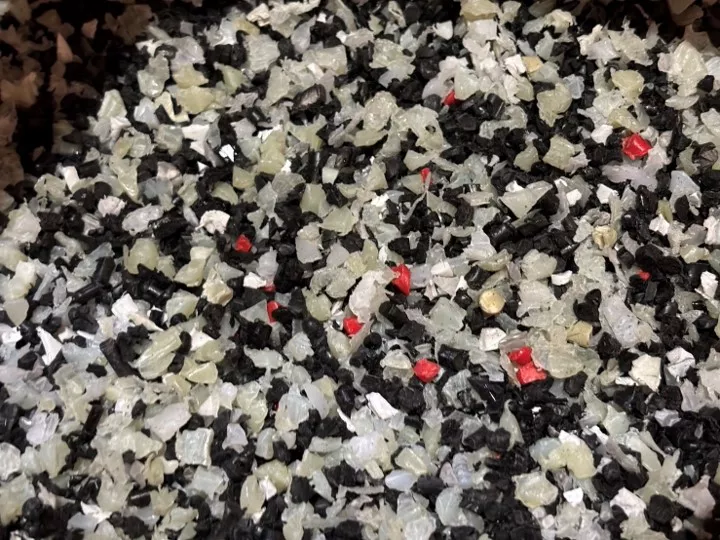
Sustainability is becoming increasingly important in engineering material selection. With proper compounding and quality control, recycled nylon materials can still deliver stable mechanical performance while supporting circular material use.
Learn more about recycled nylon applications and material consistency in Toughened Recycled Nylon Solutions for Engineering Applications and How Nylon Recycling Systems Improve Material Stability.
Custom Nylon Compounding and Material Optimization
Standard nylon grades do not always meet every application requirement. In many cases, performance is achieved by adjusting glass fiber content, mineral fillers, impact modifiers, and other additives to balance strength, dimensional stability, toughness, and cost.
This is why nylon is more than just PA6, PA66, or PA12 — it is a highly customizable engineering material platform.
Learn how formulation and additives can be used to tailor nylon compounds for specific applications: PA Compounds, Additives and Customization.
Frequently Asked Questions About Nylon Materials
How do I choose between PA6, PA66, and PA12 in real applications?
PA6 is generally chosen for cost-effective and general-purpose applications, PA66 for higher strength and heat resistance, and PA12 for low moisture absorption and dimensional stability.
When should I use glass fiber vs mineral-filled nylon?
Glass fiber reinforced nylon is commonly used when high strength and stiffness are required.
Mineral-filled nylon is often preferred for applications requiring better surface finish, flowability, and dimensional stability, such as housings or cosmetic components. Understanding this trade-off is important in applications like automotive parts and enclosures.
Is higher glass fiber content always better?
Not necessarily. Higher glass fiber content improves stiffness, but also introduces trade-offs. While increasing glass fiber content improves stiffness and strength, it can also lead to increased brittleness and more challenging processing conditions.
Material selection should balance mechanical performance with manufacturability and design requirements.
How can I improve impact strength in nylon materials?
Impact strength is typically improved through material modification rather than simply changing the base polymer. This is commonly achieved by adding elastomer-based impact modifiers, which help absorb energy and reduce crack propagation.
What are the most common causes of failure in nylon parts?
Failures in nylon components are often related to improper material selection, moisture-related dimensional changes, warpage caused by uneven shrinkage or fiber orientation, and insufficient impact resistance for dynamic loading.
In many cases, these issues can be addressed through better material formulation and design considerations.
Can nylon replace metal in all applications?
Not all applications, but many.
Nylon is commonly used to replace metals such as aluminum, zinc die castings, brass, and in some cases steel, especially when weight reduction, corrosion resistance, and cost efficiency are priorities. Typical examples include brackets, housings, covers, gears, handles, and structural components.
However, metal may still be required in applications involving extremely high loads, elevated temperatures, or demanding long-term creep performance.
You can explore typical use cases here: Top Plastics for Metal Replacement.
What is more important: material selection or processing?
Both are equally important.
Even the best material can underperform if processing conditions are not properly controlled. Moisture control, mold design, and cooling conditions all play a critical role in final part performance.
This is why material selection and processing should always be considered together.
Key Takeaways for Nylon Material Selection
- Nylon material selection is not about choosing the strongest option, but finding the right balance between mechanical performance, processing, and cost.
- PA6, PA66, and PA12 each offer different advantages depending on environmental conditions, moisture exposure, and design requirements.
- Reinforcement systems such as glass fiber, carbon fiber, or hybrid fillers play a critical role in achieving target performance.
- Processing conditions, especially moisture control and molding parameters, can significantly impact final part performance.
- In many applications, optimized material formulation can achieve better overall performance than simply upgrading to a higher-grade polymer.
Conclusion: Nylon Is a Material Platform, Not Just a Material
Nylon is more than just a material — it is a highly adaptable engineering platform.
With the right combination of formulation, reinforcement, and processing strategy, nylon can replace metals, improve durability, and unlock new design possibilities.
Understanding these differences is the first step toward selecting the right material and achieving better performance in real-world applications, all around.
Need Support Choosing the Right Nylon Material?
If you are exploring material optimization or considering alternatives for your next project, our team at All Around Polymer (All Around Compounding) is here to support you — from material selection to real-world validation.
Feel free to contact us anytime to discuss your application or request samples for evaluation.
