
 Contact
Why Doesn't Your Molded Nylon Part Match the TDS?
Your nylon compound meets the specifications on the TDS. So why does the finished part still fail to meet your expectations?
Even when using the same nylon grade, differences in drying conditions, melt temperature, injection speed, mold temperature, and fiber orientation can lead to significant variations in mechanical strength, impact resistance, and dimensional stability.
For reinforced nylon, fiber breakage and retained fiber length introduce additional variables that may further influence final part performance.
The challenge is determining whether the problem lies in the material, the molding process, or the mold design itself.
This guide explores how injection molding conditions affect nylon performance, how to troubleshoot common molding problems, and when customized nylon compounds may provide a more effective solution.

1. Start With the Right Nylon Material
Before adjusting injection molding parameters, the first step is to confirm whether the selected nylon compound is suitable for the application.
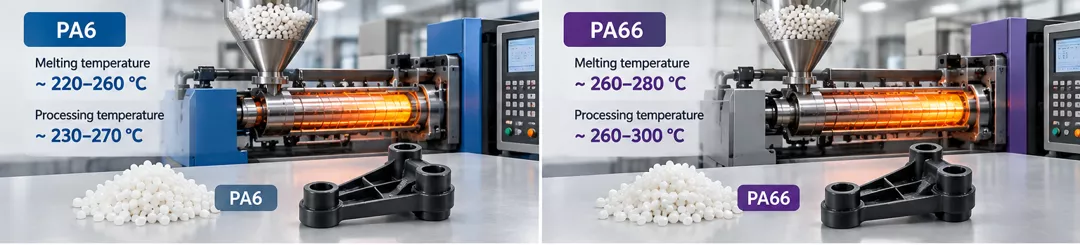
PA6, PA66, PA12, and reinforced nylon compounds differ in melting temperature, moisture absorption, crystallization behavior, and processing requirements. These differences influence both the molding process and the performance of the finished component.
PA6 vs. PA66: Processing and Performance Differences
PA6 generally melts at a lower temperature and can be processed at lower temperatures than PA66. PA66 typically offers higher melting and heat resistance. Changing from PA6 GF30 to PA66 GF30 requires reviewing more than barrel temperature: melt viscosity, filling, crystallization, cooling, shrinkage, degradation risk, and mechanical performance can all change.
Read our PA6 vs. PA66 Material Comparison.
PA12: An Alternative for Moisture-Sensitive Applications
PA12 generally absorbs less moisture than conventional PA6 or PA66 and may be useful where moisture-driven dimensional change matters. Its processing temperature range and crystallization behavior differ, so PA6 or PA66 settings should not simply be copied.
Learn more in our PA6 vs. PA12 Comparison.

Reinforcement Changes Processing Behavior
Glass fiber, carbon fiber, mineral fillers, and long fibers change more than TDS mechanical values. They can influence melt flow, shrinkage, warpage, fiber orientation, surface appearance, gate design, equipment wear, and mechanical anisotropy.
Moving from GF30 to GF50 often increases stiffness and reduces overall shrinkage, but may also increase flow resistance and orientation-related distortion.
For applications requiring higher structural performance, selecting between glass fiber and carbon fiber reinforcement or evaluating short-fiber and long-fiber nylon may introduce additional processing considerations.
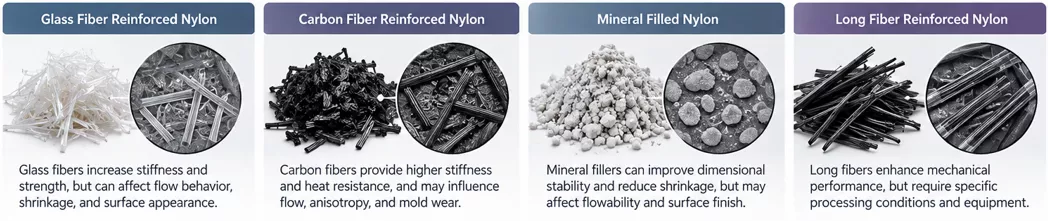
Processing should therefore be designed around the complete material system, not only the base polymer or reinforcement content.
2. How Injection Molding Parameters Affect Nylon Part Performance
Each injection molding parameter influences the material differently. Understanding these effects helps manufacturers establish a stable processing window and achieve consistent part performance.
The following table summarizes how key processing parameters affect the final properties of injection-molded nylon components.
| Processing Parameter | Influence on Molded Part Performance |
|---|---|
| Drying conditions | Affect pellet moisture content, hydrolytic degradation risk, surface quality, and mechanical property retention. Insufficient drying may cause splay marks and other surface defects. |
| Melt temperature | Affects viscosity, cavity filling, and thermal degradation risk. Excessive temperature may cause gas formation, while insufficient temperature may lead to incomplete melting and reduced mechanical properties. |
| Injection speed | Influences flow behavior, fiber orientation, weld-line formation, and appearance. |
| Packing pressure | Affects shrinkage, void formation, and dimensional consistency. |
| Mold temperature | Influences crystallization, surface quality, cooling, dimensional stability, and cycle time, affecting overall production efficiency. |
| Cooling time | Affects stiffness at ejection, deformation, and production cycle time. |
| Screw speed and back pressure | Affect melt homogenization and may influence fiber breakage in reinforced compounds. |
These parameters interact. A higher melt temperature may aid filling but also increase thermal exposure; faster injection may fill thin sections yet change fiber orientation or shear. The goal is a stable, repeatable processing window that preserves the material structure.
2.1 Drying Conditions and Moisture Control
Polyamides absorb moisture from ambient air. Excessive moisture during melt processing may cause hydrolytic degradation, reducing mechanical performance. Residual moisture may also form water vapor, causing surface defects such as splay marks (silver streaks).
Initial moisture content → drying efficiency → final moisture content → exposure after drying → processing residence time. Properly dried pellets can absorb moisture again if left exposed before molding. Use the specific grade supplier's drying recommendations as a starting point and verify actual moisture and production stability.
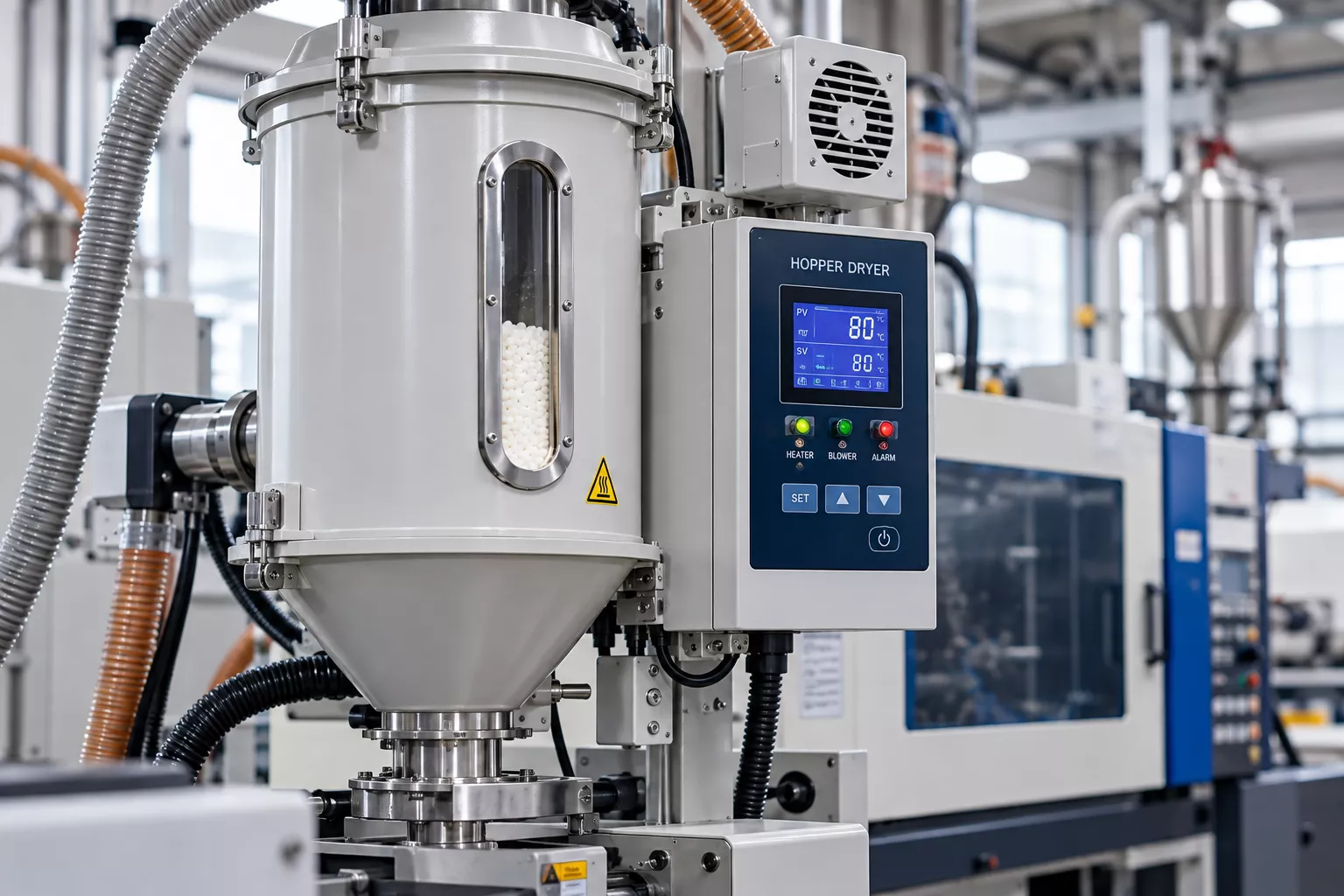
Technical note: Moisture in pellets during melt processing differs from moisture absorbed by the finished part during service. The former can cause hydrolytic degradation; the latter can change part dimensions and mechanical properties.
2.2 Melt Temperature and Thermal History
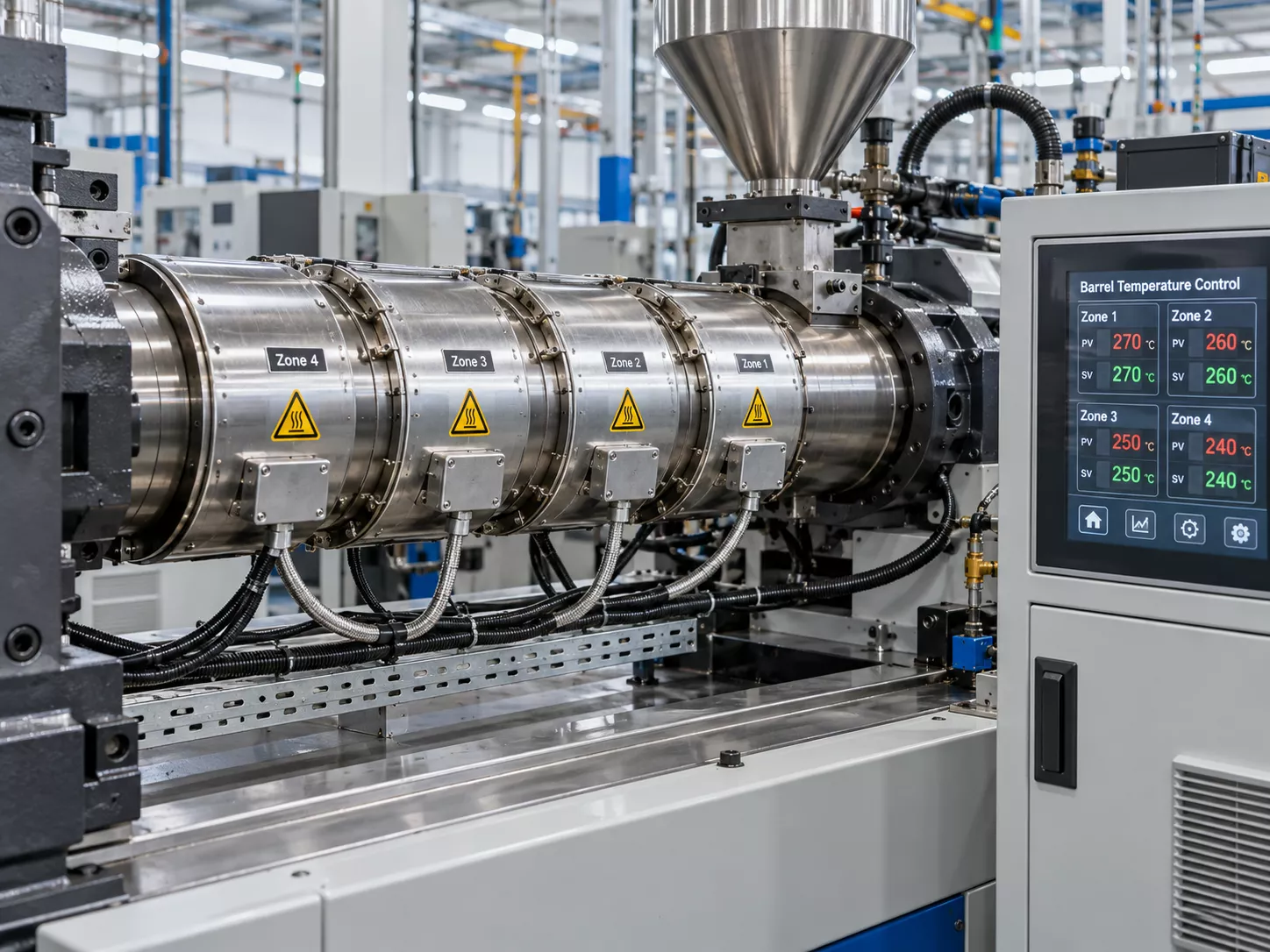
Melt temperature affects polymer viscosity, cavity filling, and final part performance.
Insufficient melt temperature may lead to incomplete melting, poor fusion, or inadequate filling, potentially reducing mechanical properties. Excessive temperature or prolonged residence time may cause thermal degradation and gas formation, resulting in surface defects and reduced material performance.
For reinforced nylon, actual melt temperature should be evaluated together with screw configuration, shear conditions, and residence time to maintain consistent processing and mechanical properties.
2.3 Injection Speed and Fiber Orientation
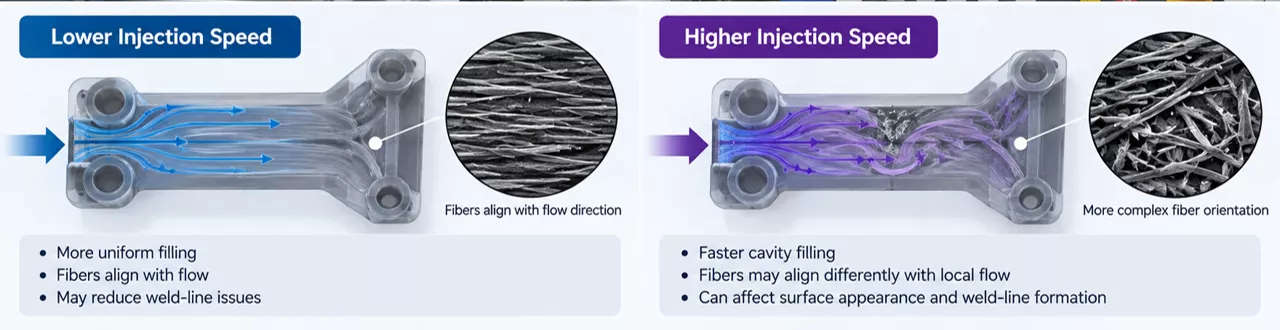
Injection speed affects how the melt fills the cavity and how reinforcing fibers align with the local flow. It can change weld-line formation, surface quality, directional properties, and filling consistency. Optimize the injection profile for the grade, geometry, gate layout, and target part properties rather than assuming that faster or slower is always better.
2.4 Packing Pressure and Dimensional Accuracy
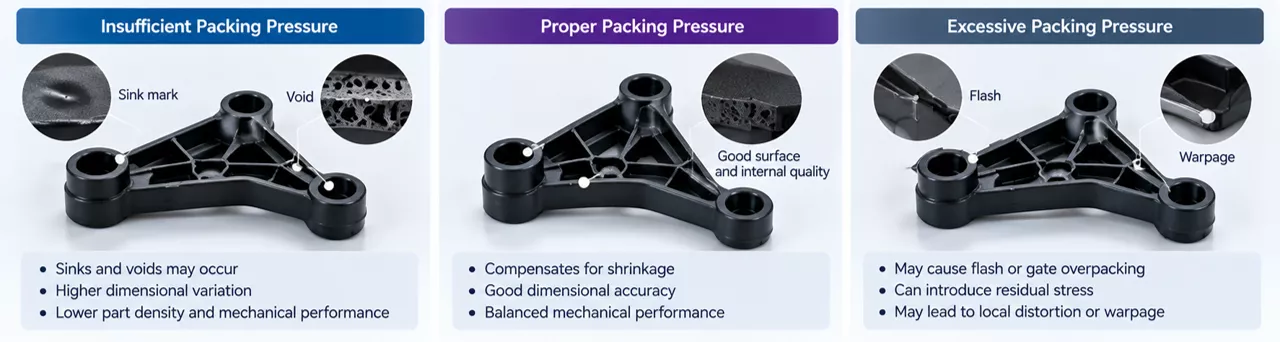
Packing compensates for shrinkage while the polymer cools. Too little packing can contribute to sinks, voids, and dimensional variation; too much may contribute to residual stress or local distortion. Consider gate freeze time, gate location, and the particular compound’s shrinkage behavior.
2.5 Mold Temperature, Cooling, and Crystallization
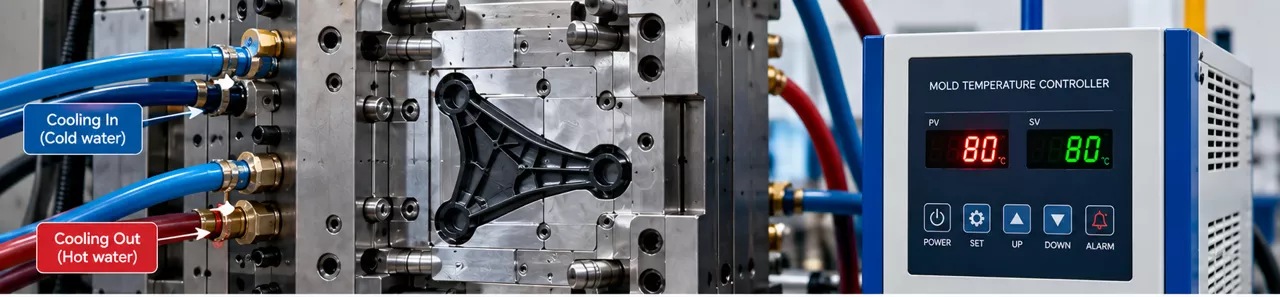
Mold temperature influences crystallization, surface appearance, shrinkage, mechanical properties, and dimensional stability.
Higher mold temperatures may improve surface quality and promote crystallization under certain conditions, but they can also extend cooling time and increase the overall molding cycle. Conversely, excessively low mold temperatures may lead to insufficient crystallization, poor surface quality, or dimensional instability.
Uneven cooling can create temperature gradients and distortion after ejection, affecting both part quality and production consistency.
Optimizing mold temperature and cooling conditions is essential for achieving a balance between part performance, dimensional stability, and overall production efficiency.
3. Why Fiber Orientation Matters in Reinforced Nylon Injection Molding
As reinforced nylon fills a cavity, glass or carbon fibers tend to align with the local melt-flow pattern. Mechanical properties can therefore depend on measurement direction, a behavior known as mechanical anisotropy.
Gate location → melt-flow pattern → fiber orientation → directional mechanical properties and shrinkage → final part performance. A component may show different tensile, flexural, or shrinkage behavior along versus across the dominant flow direction.
Why Molded Test Specimens May Produce Different Results
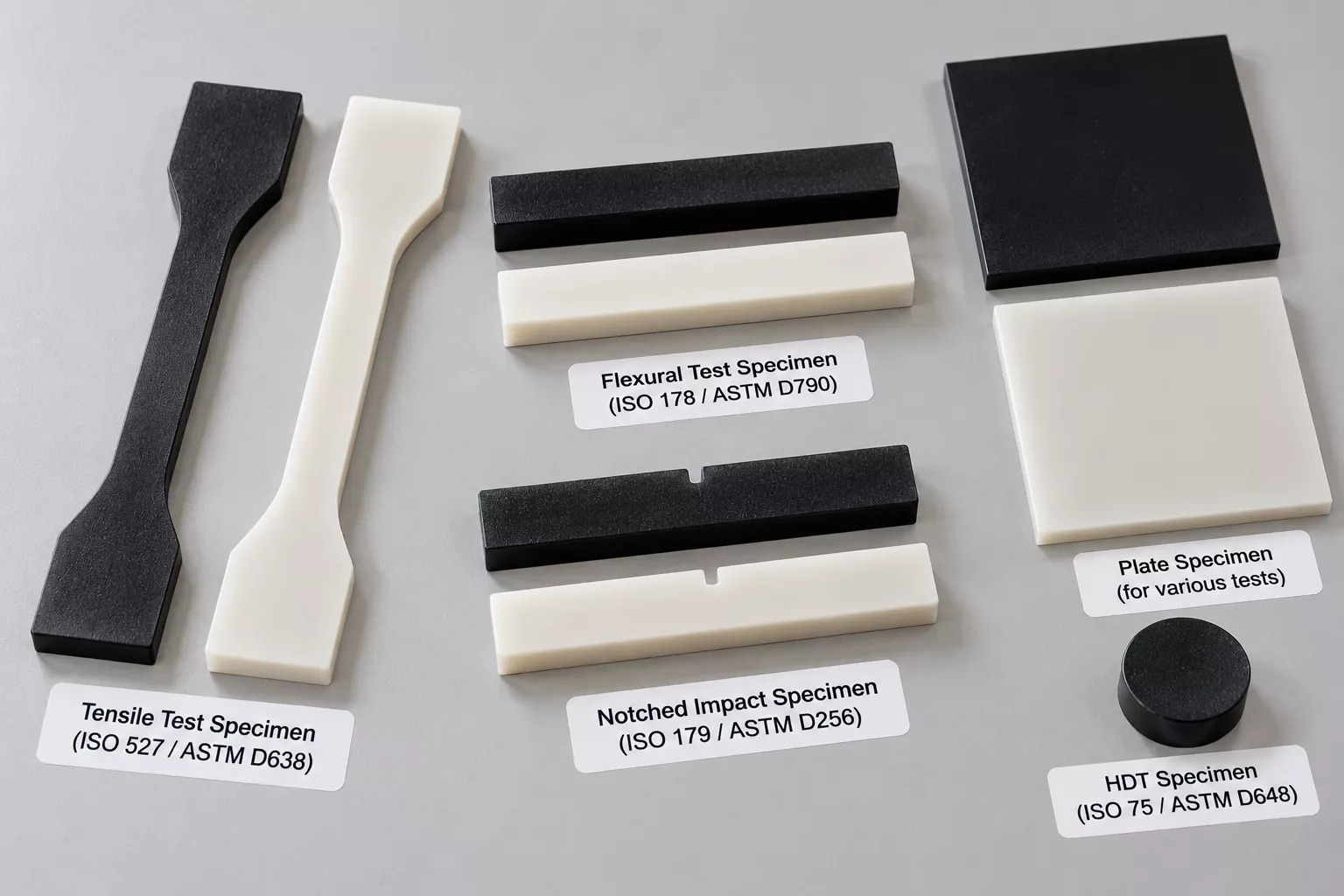
TDS values are obtained from specimens made and tested under defined conditions. Specimens cut from a molded plate or actual part may differ in fiber orientation, distribution, cooling history, geometry, and cutting direction. Their results should not automatically be compared directly with standardized TDS values.
- Confirm specimen preparation, geometry, and test standard.
- Record cutting direction relative to melt flow and gate location.
- Review fiber orientation, material moisture condition, and molding history.
For related processing considerations, see our Glass-Filled Nylon Injection Molding Guide.
4. Fiber Breakage: A Critical Consideration for Long-Fiber-Reinforced Nylon
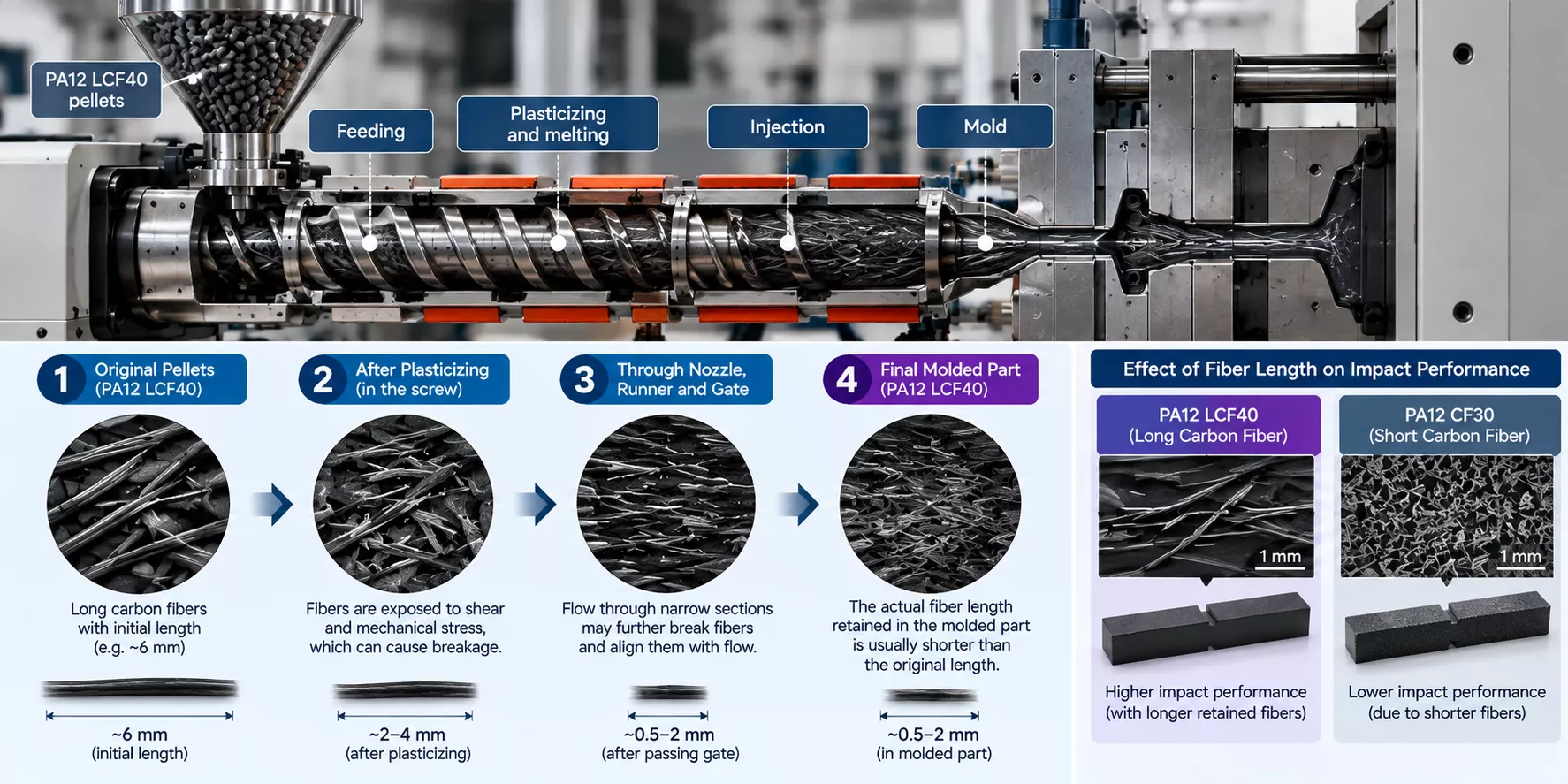
Initial fiber length in the pellets is not necessarily the length retained after molding. Plasticization and injection can shorten fibers, potentially reducing the expected advantages of long-fiber reinforcement. Excessive screw speed, high back pressure, restrictive gates or runners, high shear, unsuitable screw configuration, and repeated processing may contribute.
Example: Evaluating Impact Performance in PA12 LCF40
Consider a PA12 compound reinforced with 40% long carbon fiber selected for stiffness and impact performance. If processed specimens fall short of expected impact strength, increasing melt temperature alone may not solve the problem. Instead, review the following:
- Processing equipment: Is the injection molding machine suitable for long-fiber compounds, including its screw design and plasticizing system?
- Flow-path restrictions: Could the nozzle, runner, or gate cause excessive fiber breakage or uneven fiber distribution?
- Specimen preparation: Were specimens molded to the relevant standard or obtained from a molded part?
- Fiber orientation: Does the testing direction influence measured properties?
- Material selection: Does the long-fiber compound suit the processing equipment, part geometry, and performance requirements?
The aim is to determine whether the limitation arises from the material formulation, processing conditions, equipment compatibility, specimen preparation, or a combination of these factors.
If the existing equipment is unsuitable for long-fiber processing, a short-carbon-fiber compound may be considered as an alternative. However, its mechanical performance must be validated against the application requirements
For further detail, see LCF vs. LGF vs. Short-Fiber-Reinforced Nylon.
5. Understanding Warpage and Shrinkage in Reinforced Nylon
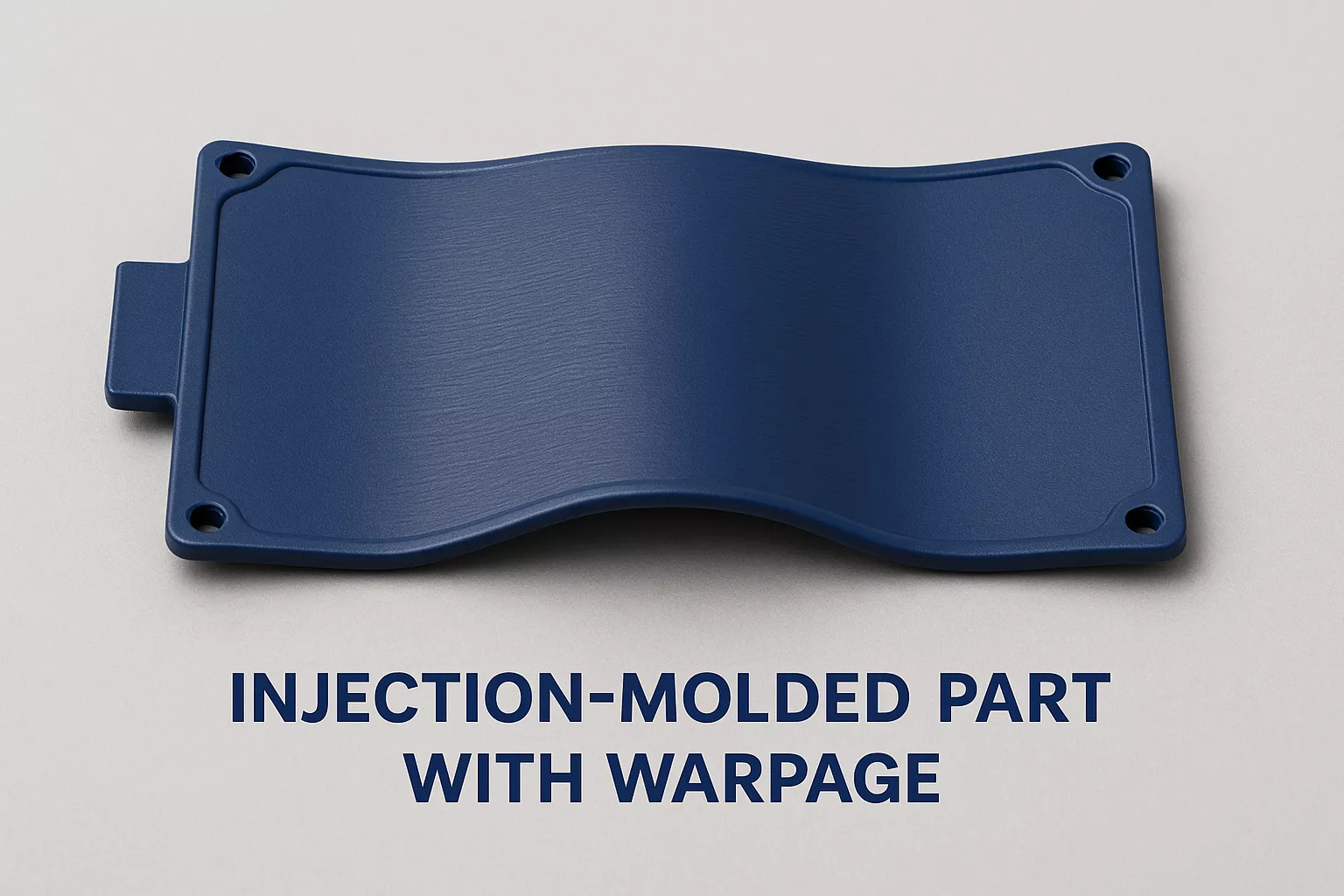
Glass fiber usually reduces overall shrinkage, but it does not automatically eliminate warpage. Fiber orientation can restrict shrinkage differently along and across the flow direction. Combined with uneven cooling, geometry, and residual stress, this can create dimensional distortion. Lower overall shrinkage does not necessarily mean lower warpage.
What Causes Warpage in Nylon Components?
- Uneven mold cooling and nonuniform wall thickness
- Fiber orientation and directional shrinkage
- Gate position and melt-flow pattern
- Inadequate or excessive packing
- Crystallization differences
- Reinforcement content and distribution
How Can Warpage Be Reduced?
Identify the dominant cause before changing machine settings. Review cooling uniformity, gate placement, packing, and wall-thickness variations. If reinforcement orientation or the compound’s shrinkage behavior remains limiting, a glass fiber/mineral filler hybrid may be evaluated. If dimensions change mainly during humid service, a lower-moisture polyamide may be more relevant than additional molding adjustments.
Read How to Reduce Warpage and Shrinkage in Nylon Compounds for more detail.
6. Common Nylon Injection Molding Problems and Possible Solutions
Not every defect requires a new compound, and not every problem can be eliminated by changing machine settings. The table below is a starting point for systematic investigation; actual causes must be validated under repeatable production conditions.
| Problem | Possible Causes | Recommended Actions |
|---|---|---|
| Low impact strength | Moisture-related degradation, fiber breakage, unsuitable reinforcement, or specimen differences | Check drying and testing conditions; review processing shear; assess impact-modified nylon if required. |
| Warpage | Uneven cooling, directional shrinkage, fiber orientation, or part geometry | Review mold cooling, gate location, packing, and reinforcement formulation. |
| Poor surface appearance | Fiber exposure, unsuitable mold temperature, filling or flow behavior | Optimize mold temperature and injection profile; consider material formulation. |
| Dimensional instability | Moisture absorption, nonuniform shrinkage, crystallization, or residual stress | Review conditioning, mold temperature, cooling, and material selection. |
| Insufficient stiffness | Insufficient reinforcement, fiber orientation, or material limitations | Review molding and reinforcement structure; evaluate GF, CF, or long fibers. |
| Weld-line weakness | Flow-front convergence, weak bonding, gate design, or fiber orientation | Review gate position, melt temperature, filling, and performance requirements. |
| Incomplete filling | Insufficient flow, unsuitable temperature, restricted flow path, or venting | Review processing, gate/runner geometry, venting, and material flow. |
| Batch-to-batch variation | Moisture inconsistency, unstable melt temperature, handling, or process variation | Verify material condition and standardize drying, handling, and molding. |
7. When Should You Change the Nylon Compound Instead of the Processing Conditions?
For a previously validated grade that produces inconsistent results, start by confirming stable material handling, processing, and testing. If a stable processing window has been reached but the part still fails to meet the application requirements, reconsider the compound. No amount of mold-temperature adjustment can give a base polymer thermal capability that it does not possess.
Matching Material Modification to the Performance Requirement
| Performance Requirement | Potential Material Solution | Important Considerations |
|---|---|---|
| Higher stiffness | Higher glass fiber loading or carbon-fiber reinforcement | Check flow, anisotropy, toughness, and appearance. |
| Improved impact resistance | Impact-modified nylon or alternative reinforcement | Confirm stiffness, heat resistance, and required impact mode. |
| Reduced warpage | Optimized reinforcement or hybrid GF + mineral filler | Validate directional shrinkage in the actual part. |
| Dimensional stability in humidity | Lower-moisture polyamides such as PA12 | Check operating temperature, chemical exposure, and cost. |
| Structural performance | Carbon-fiber- or long-fiber-reinforced nylon | Check fiber retention, orientation, machine compatibility, and final-part tests. |
| Stiffness and toughness balance | Customized GF + impact modifier formulation | Validate all required properties together. |
The appropriate compound is not necessarily the one with the highest tensile strength or fiber content; it is the formulation that meets the complete requirements under actual processing and service conditions.
8. Custom Nylon Compounding: Connecting Formulation With Part Performance
When standard grades cannot meet all application requirements, customized compounding can adjust the reinforcement and additive package to address the specific limitation. All Around Polymer develops PA6, PA66, PA12, and reinforced nylon compounds, including glass-fiber, carbon-fiber, long-fiber, impact-modified, and hybrid glass/mineral-filled systems.
How We Approach Material-Related Performance Problems
- Step 1 — Understand the application: Define strength, impact, tolerances, operating temperature, environment, and testing requirements.
- Step 2 — Review the existing compound: Examine the base polymer, reinforcement, additives, and available technical data.
- Step 3 — Review processing and tests: Check drying, melt and mold temperatures, gate design, specimen preparation, and test conditions.
- Step 4 — Identify the limitation: Separate process instability, tooling effects, formulation limits, and their interactions.
- Step 5 — Evaluate material modifications: Develop and validate alternatives when the current grade cannot meet the target within a practical processing window.
Learn about PA Compounds, Additives, and Customized Material Solutions.
9. Frequently Asked Questions About Nylon Injection Molding
Why does my molded nylon part have lower mechanical strength than the TDS value?
TDS values are measured under defined specimen and test conditions. Actual parts can differ in fiber orientation, moisture condition, crystallinity, thermal history, geometry, and specimen preparation. Check these factors and the testing method before attributing a difference to the compound.
Does increasing mold temperature improve nylon mechanical properties?
It can change crystallization, surface appearance, and cooling and may improve specific properties under some conditions. It does not improve every property automatically; the outcome depends on grade, reinforcement, geometry, and the rest of the process.
Why can glass-fiber-reinforced nylon still experience warpage?
Fibers restrict shrinkage differently along and across their orientation. Directional shrinkage combined with uneven cooling or geometry may distort the part even when overall shrinkage is reduced.
Can injection molding conditions affect the impact strength of long-fiber nylon?
Yes. They may affect retained fiber length, orientation, degradation, and final molded structure. Review processing, fiber retention, specimens, tests, and material selection together.
When should I consider impact-modified nylon instead of increasing glass fiber content?
Higher glass loading usually increases stiffness but may not deliver the required impact resistance. If stable processing and valid testing still show insufficient toughness, consider impact modification or another reinforcement system and verify the stiffness–toughness–heat balance.
When should I consider changing from PA6 or PA66 to PA12?
PA12 may be worth evaluating when moisture uptake and moisture-related dimensional changes are major concerns. Also assess thermal, mechanical, chemical, processing, and cost requirements before changing the base polymer.
Conclusion: Achieving Better Nylon Part Performance
The performance of an injection-molded nylon component depends on the interaction between material formulation, processing conditions, and mold design.
When a molded part fails to meet its expected performance, identifying the underlying cause is essential before adjusting processing parameters or changing the material.
If stable processing conditions have been achieved but the component still cannot meet its mechanical or dimensional requirements, customized nylon compounding may provide an alternative solution.
Need Help Improving Your Injection-Molded Nylon Part?
Contact us to discuss your current material, processing conditions, and performance requirements. Our technical team can help evaluate suitable material modifications and customized compounding solutions for your application.
