
 Contact
In recent years, plastic has often been portrayed as a material that should be phased out. From packaging bans to public campaigns, the narrative seems clear: less plastic is better.
Yet in real industrial and engineering environments, plastics have not disappeared. They were originally developed to improve everyday convenience and, in many applications, to reduce overall material weight and energy consumption across industrial systems.
In this sense, plastics have been redefined, re-engineered, and held to much higher expectations.
After “Plastic Reduction,” Are We Actually Using Less Material?
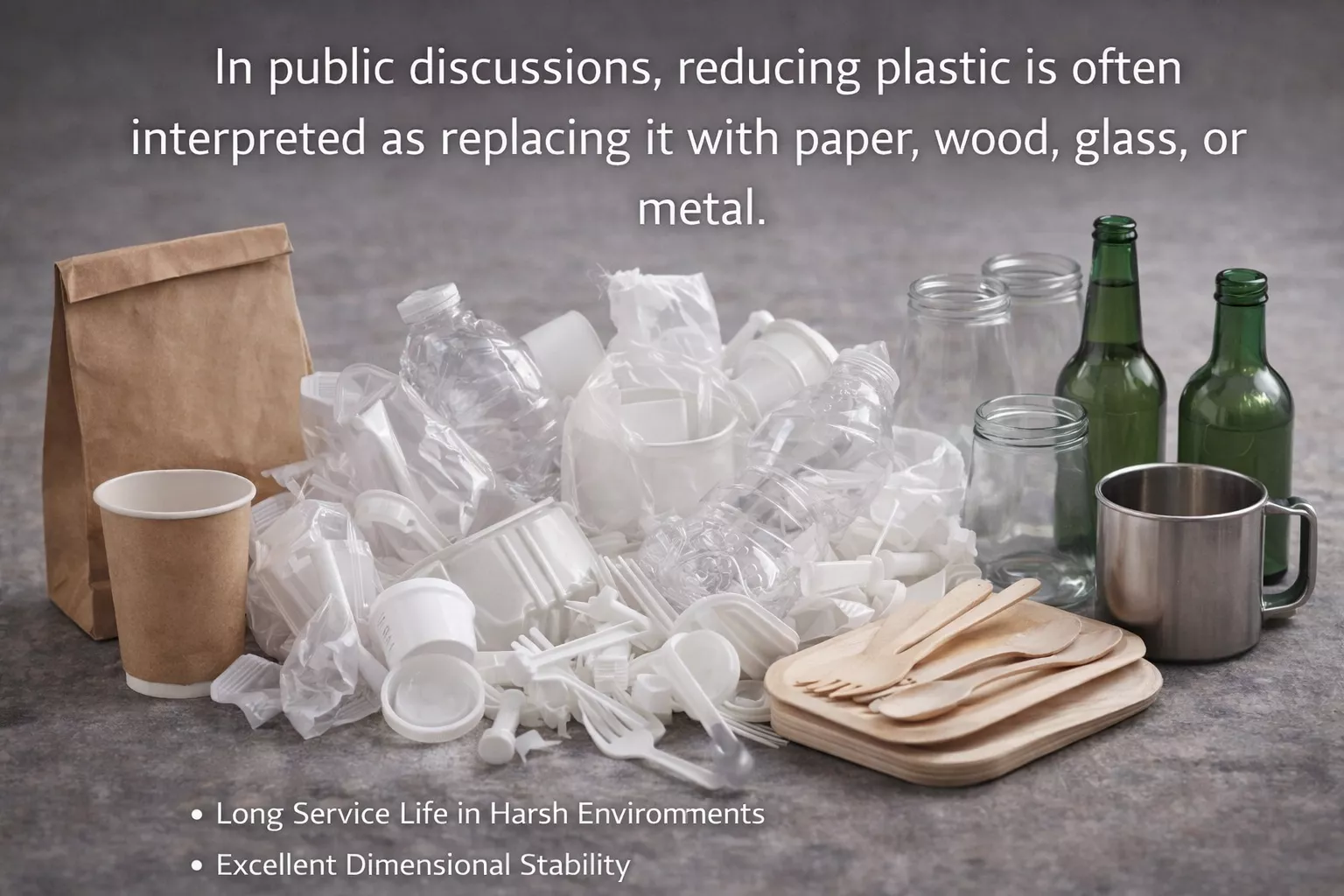
In public discussions, reducing plastic is often interpreted as replacing it with paper, wood, glass, or metal. However, when products are evaluated from a lifecycle perspective, the picture becomes more complex.
Substituting plastics with alternative materials can introduce trade-offs that are not always immediately visible:
Paper and wood materials
- Dependence on forestry resources, which can affect carbon capture when not sustainably managed
- Additional transportation emissions due to lower material density and higher volume requirements
Glass and metal materials
- Higher energy consumption during production and processing
- Increased transportation emissions due to greater weight
- Higher handling and installation effort in manufacturing and logistics
As a result, a material that appears more “natural” does not automatically lead to a lower environmental footprint. This is why material discussions are gradually shifting from what a product is made of to how that material performs over time — especially in metal replacement designs, where weight, durability, and lifecycle performance are often evaluated together.
Why Lifecycle Thinking (LCA) Is Becoming Central
Today, material evaluation increasingly focuses on lifecycle performance rather than isolated attributes. Key questions include:
- How long can the product be used reliably?
- Does the material maintain dimensional and mechanical stability over time?
- Will premature deformation or aging lead to early replacement?
In many cases, durability and long-term stability reduce overall environmental impact more effectively than frequent material substitution.
A practical example: scooter engine covers
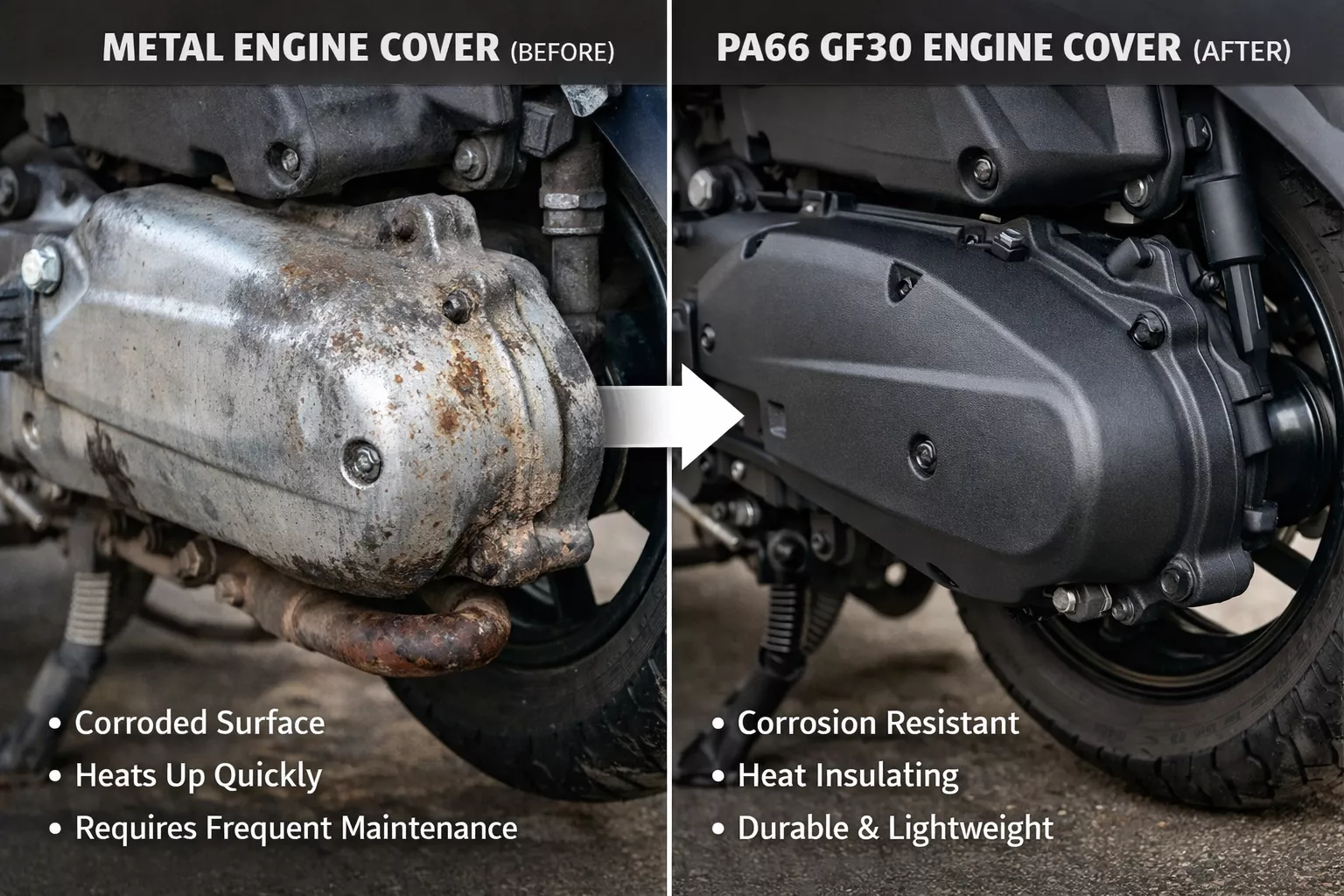
Traditionally, components such as scooter enginer covers or back-mirror holders were manufactured from metal. While mechanically strong, metal covers are prone to corrosion over time, particularly in humid or coastal environments, which can lead to surface degradation and reduced service life.
In many modern scooter applications, these parts have been replaced with glass-fiber–reinforced engineering plastics, such as PA66 with 30% glass fiber (PA66 GF30).
From a lifecycle perspective, this material change offers several advantages:
- Improved resistance to corrosion and environmental aging
- Longer service life with reduced maintenance requirements
- Lower thermal conductivity, resulting in a surface that is less hot to the touch during operation
This example illustrates how durability and long-term performance, rather than material category alone, can play a decisive role in reducing overall environmental impact.
“Plastic” Is Not a Single Material Category
In everyday language, plastic is treated as a single concept. In engineering reality, however, it represents very different material classes, each designed for specific performance levels.
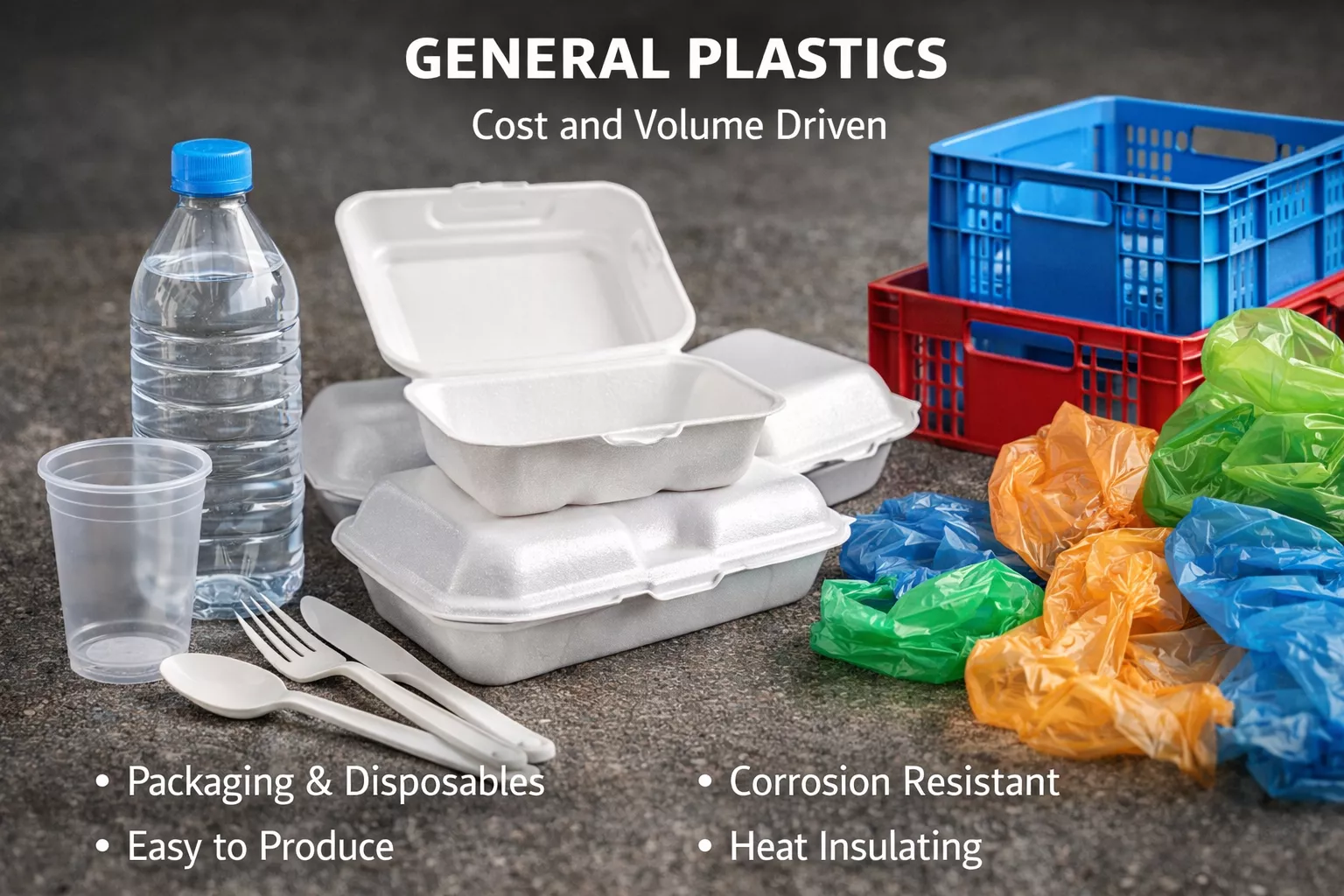
General Plastics: Cost and Volume Driven
General-purpose plastics are widely used in packaging and non-structural products. They are optimized for cost efficiency and ease of processing, but typically offer limited long-term mechanical or thermal stability. In this category, plastics function primarily as consumable materials.
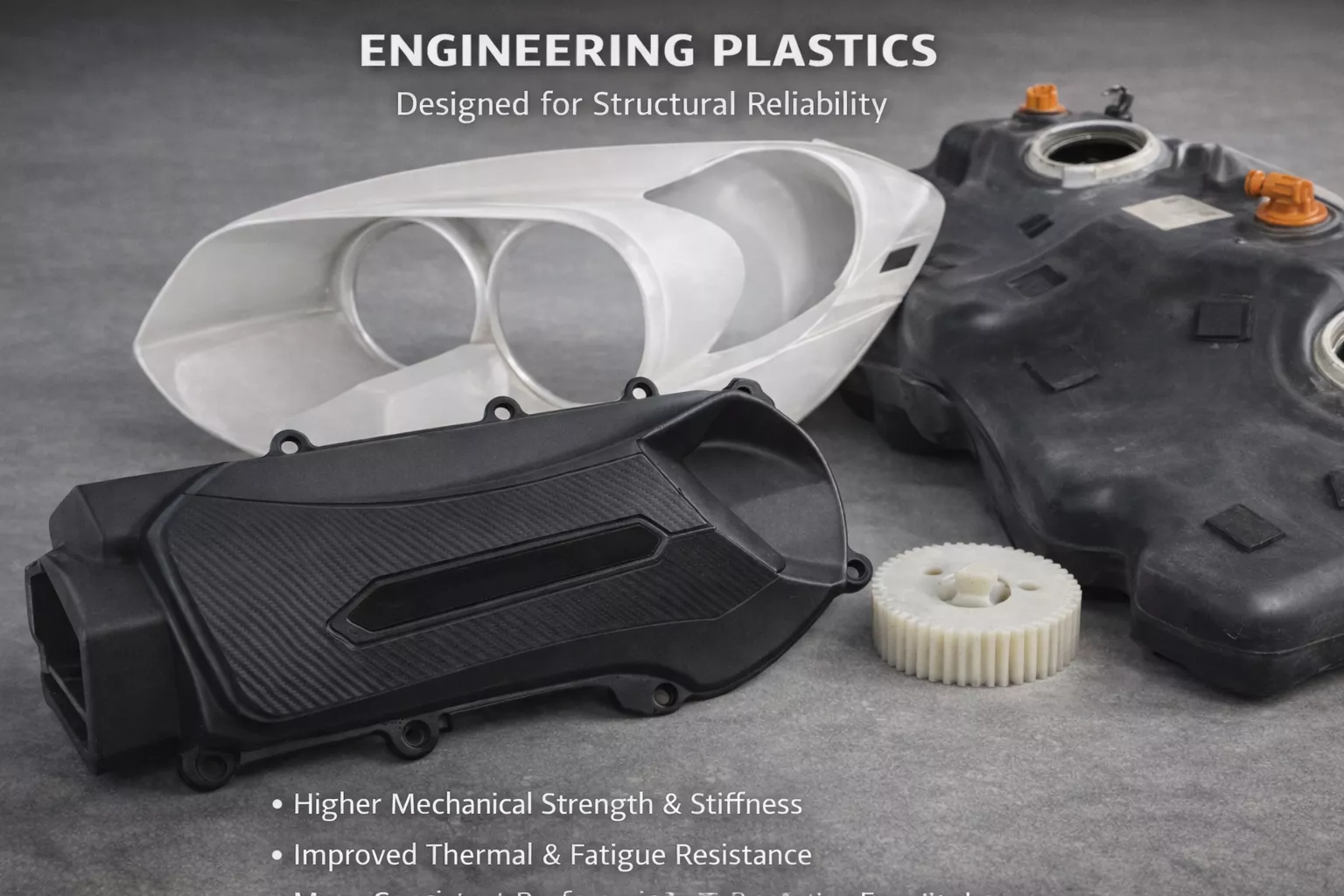
Engineering Plastics: Designed for Structural Reliability
When components are required to withstand mechanical loads, temperature variation, or prolonged use, materials move into the engineering plastics category. Engineering plastics are developed to provide:
- Higher mechanical strength and stiffness
- Improved thermal and fatigue resistance
- More consistent performance in real operating environments
In many applications, engineering plastics are not compromises — they are intentional structural materials.
📌 For readers interested in a more detailed breakdown of engineering plastics and how they differ from general plastics in real applications, we have outlined this topic in a separate article focused specifically on engineering material selection.
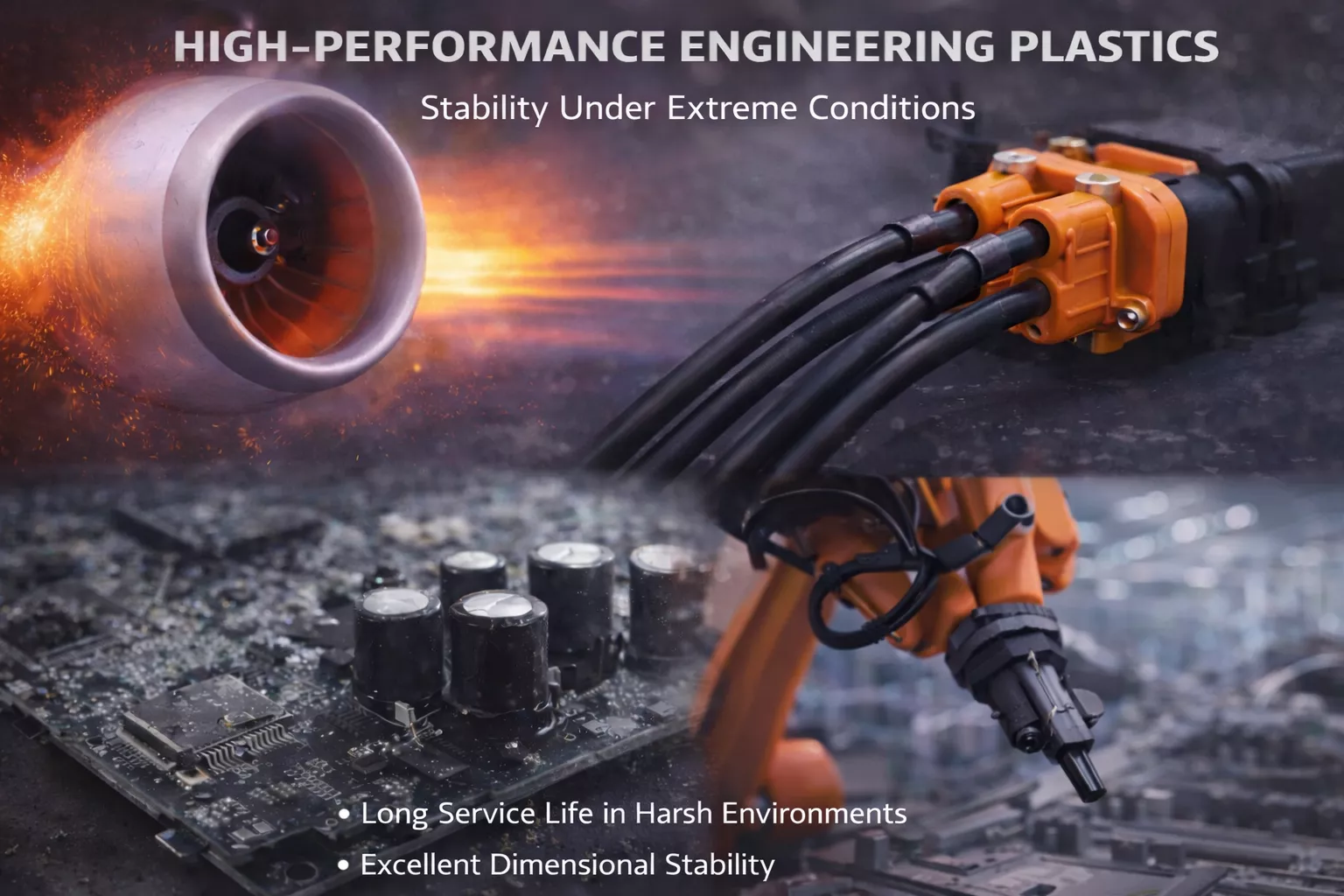
High-Performance Engineering Plastics: Stability Under Extreme Conditions
As operating conditions become more demanding — such as high temperatures, humidity, long service life, or tight dimensional tolerances — materials must perform at an even higher level.
High-performance engineering plastics exist to deliver reliability where other materials struggle to remain stable over time. For applications involving high-heat reflow soldering or chemical exposure, high-performance polyamides (HPPAs) provide the necessary thermal stability.
They are not intended to replace all plastics, but to solve specific engineering challenges under extreme conditions.
Why This Distinction Matters More Than Ever
As product lifecycles become longer and applications more demanding, treating all plastics as interchangeable often results in oversimplification and poor material choices.
The real question is no longer whether plastic should be used, but whether the chosen material class truly matches the product's operating environment. This shift encourages a more nuanced discussion:
- Which plastics are essential due to performance, durability, or safety requirements?
- And where can materials be reconsidered, optimized, or replaced to improve environmental outcomes without sacrificing reliability?
Plastics Have Not Disappeared — They Have Evolved
Plastics remain widely used not because they are convenient, but because they offer a unique balance of weight, design flexibility, durability, and manufacturability.
What has changed is the expectation: plastics are no longer judged by price alone, but by how reliably they perform throughout a product's lifecycle.
Conclusion
Sustainability is not achieved by eliminating a material category. It is achieved by understanding material limitations and applying each material where it can perform responsibly and effectively. This includes the responsible use of recycled nylon without compromising structural performance.
When the conversation shifts from slogans to engineering reality, plastics return to their proper place — as materials that must be carefully selected, designed, and justified.
