
 Contact
Quick Answer
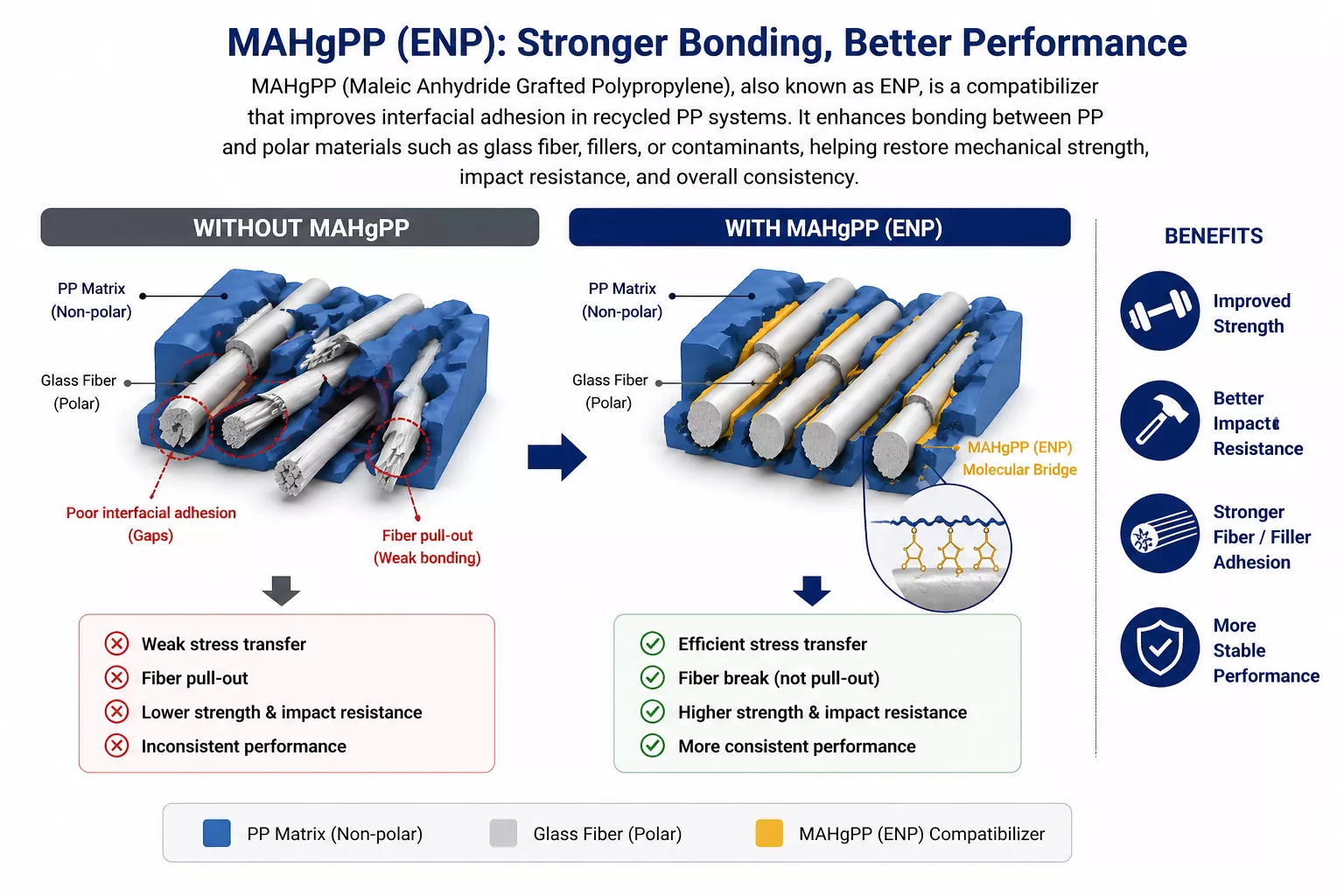
MAHgPP (Maleic Anhydride Grafted Polypropylene), also known as ENP, is a compatibilizer used to improve interfacial adhesion in recycled polypropylene (PP) systems. It enhances bonding between PP and polar materials such as glass fiber, carbon fiber, fillers, or contaminants, helping restore mechanical strength, impact resistance, and overall consistency.
Why Recycled PP Often Underperforms
Understanding the types of plastic raw materials is essential when working with recycled systems. In theory, polypropylene is a highly versatile and durable material. However, once it enters the recycling stream, its performance can become inconsistent.
This is not only due to thermal degradation, but more importantly, to interfacial issues.
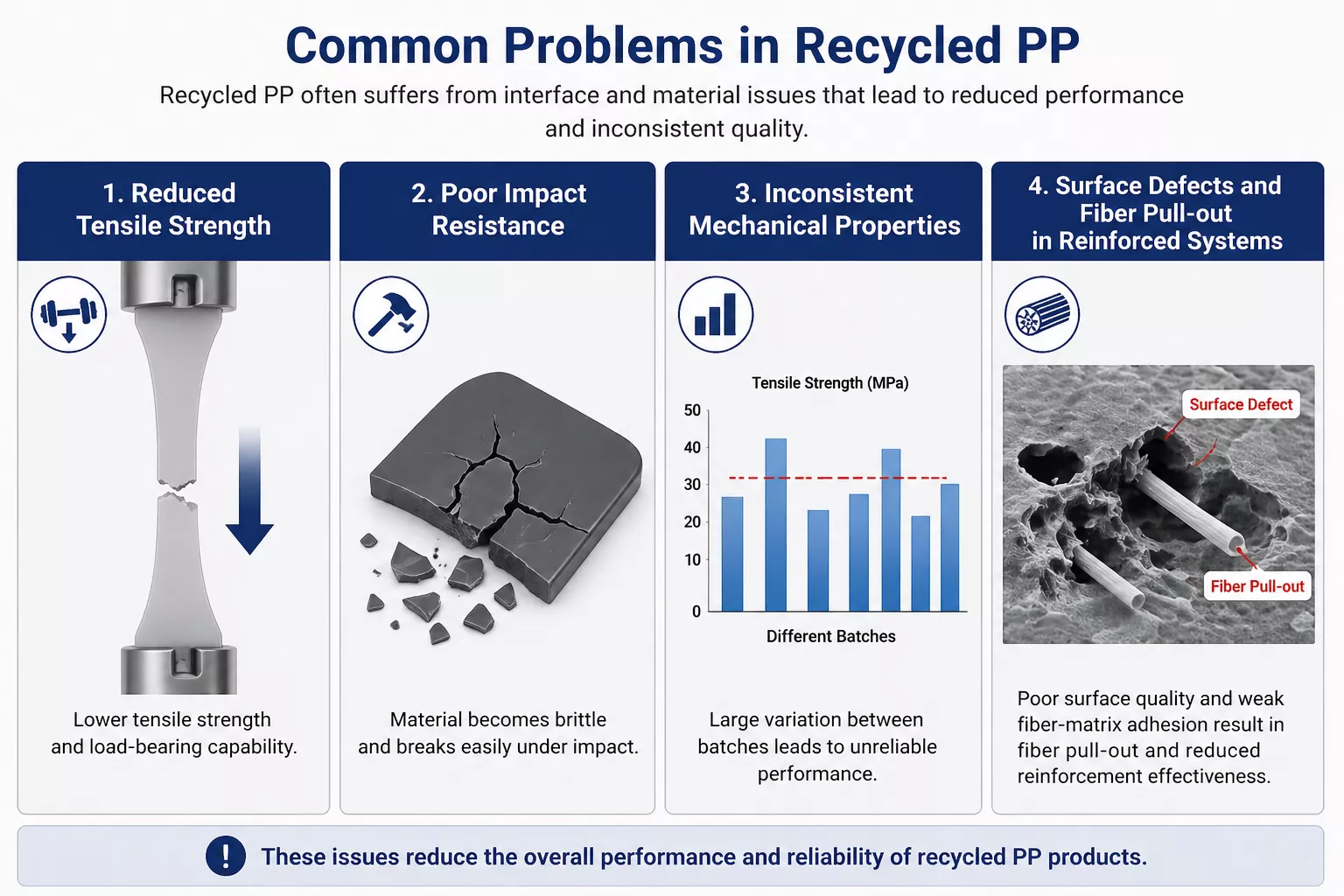
Common Problems in Recycled PP
- Reduced tensile strength
- Poor impact resistance
- Inconsistent mechanical properties
- Surface defects and fiber pull-out in reinforced systems
In many cases, the issue is not the base polymer itself, but poor interfacial compatibility between phases.
The Real Problem: Weak Interfacial Bonding of PP & GF
Recycled PP rarely exists as a pure material. It often contains:
- Residual polyethylene (PE)
- Fillers or glass fiber
- Additives from previous formulations
- Contaminants with polar characteristics
Since PP is non-polar, it does not naturally bond well with these materials. This leads to weak stress transfer, phase separation, and reduced structural integrity.
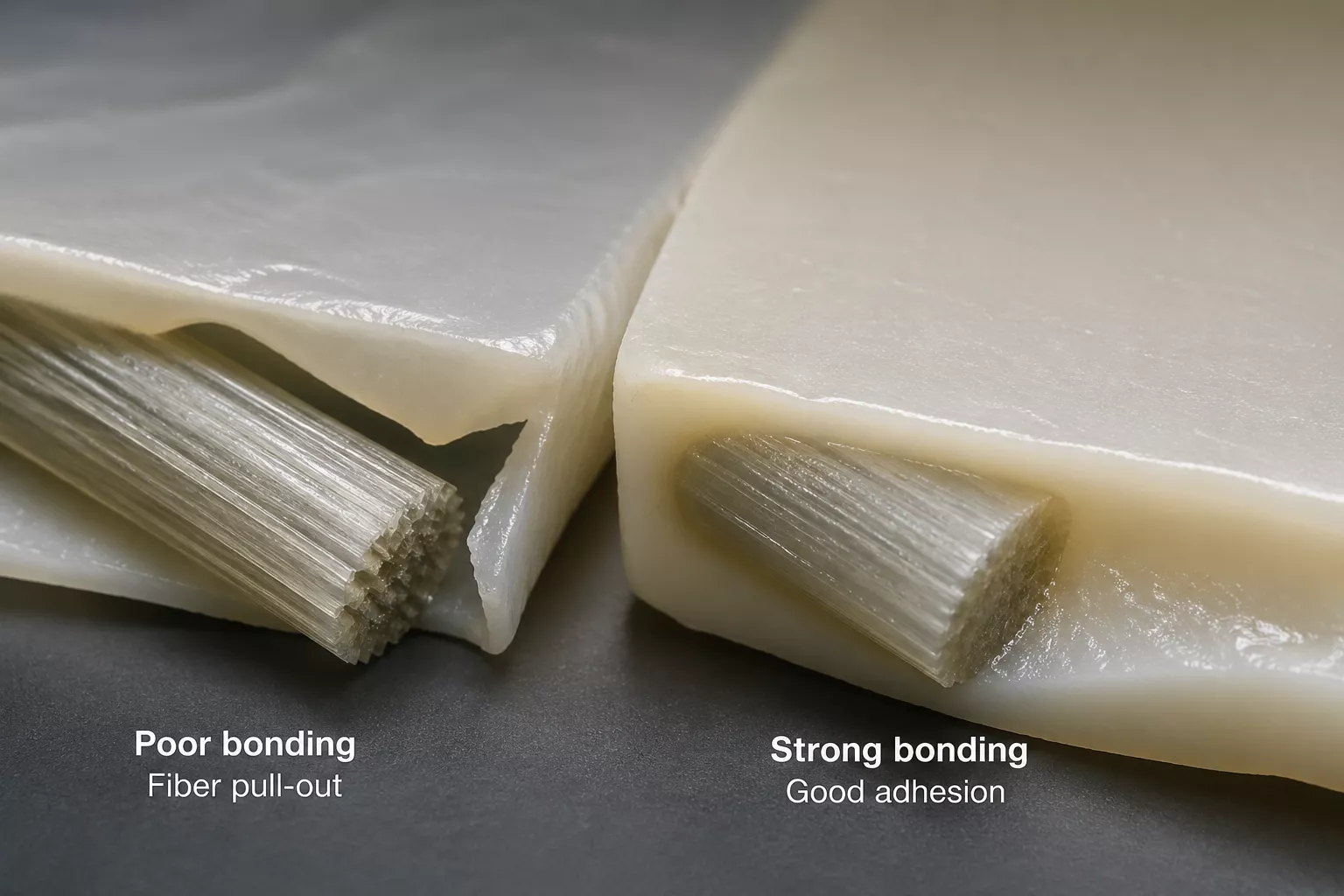
In reinforced systems, this is often observed as fiber pull-out instead of fiber break, indicating poor adhesion. This issue is particularly critical in glass fiber reinforced PP (PP GF) systems, where interfacial bonding directly determines the effectiveness of load transfer and overall mechanical performance.
How MAHgPP Solves the Problem
MAHgPP acts as a compatibilizer by creating a molecular bridge between non-polar polypropylene and polar materials, significantly improving interfacial adhesion and mechanical performance.
Mechanism
- PP backbone → compatible with the PP matrix
- Maleic anhydride groups → interact with polar surfaces such as glass fiber, fillers, or oxidized polymers
Result
- Improved interfacial adhesion
- More efficient stress transfer
- Enhanced mechanical performance and consistency
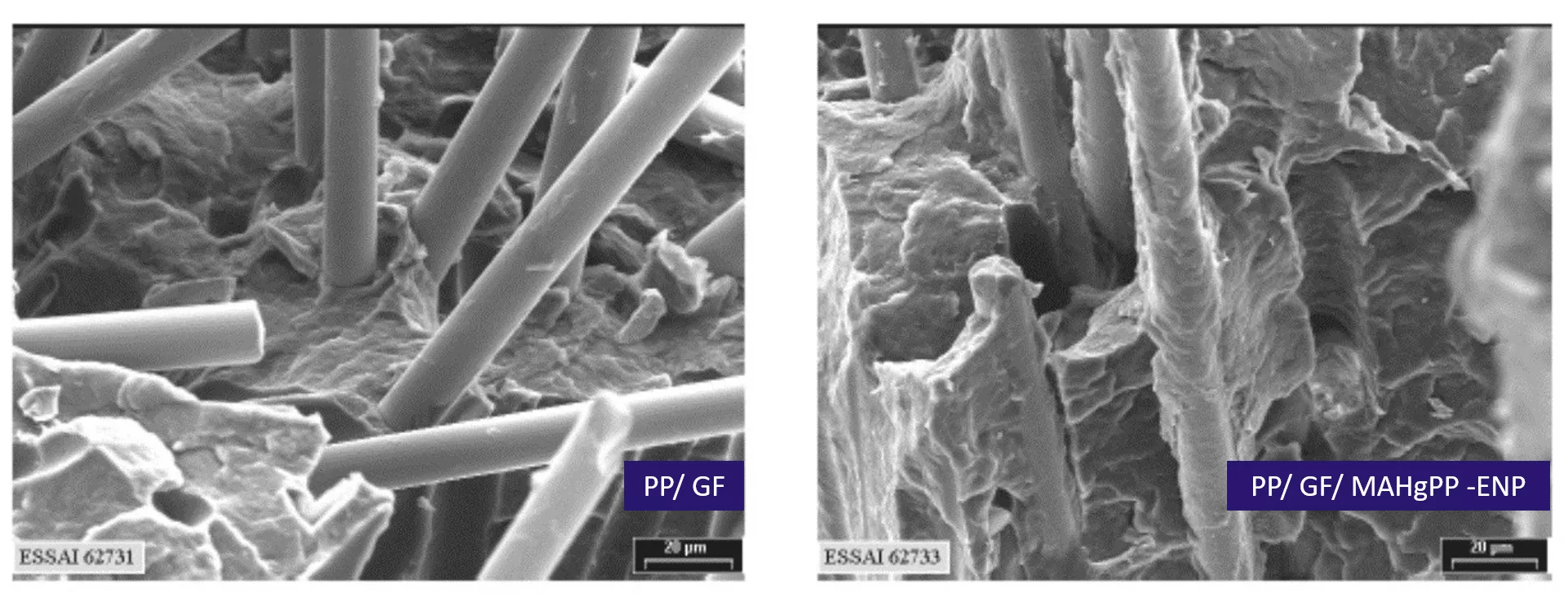
Above SEM images showing improved interfacial adhesion in glass fiber reinforced polypropylene (PP/GF) systems.
- Left: Limited bonding between PP matrix and glass fiber.
- Right: With MAHgPP (ENP), the matrix exhibits stronger interaction and better coverage of the fiber surface.
MAHgPP is widely used as a compatibilizer in recycled polypropylene systems to improve interfacial adhesion between non-polar PP and polar materials.
Introducing All Around Polymer's MAHgPP (ENP)
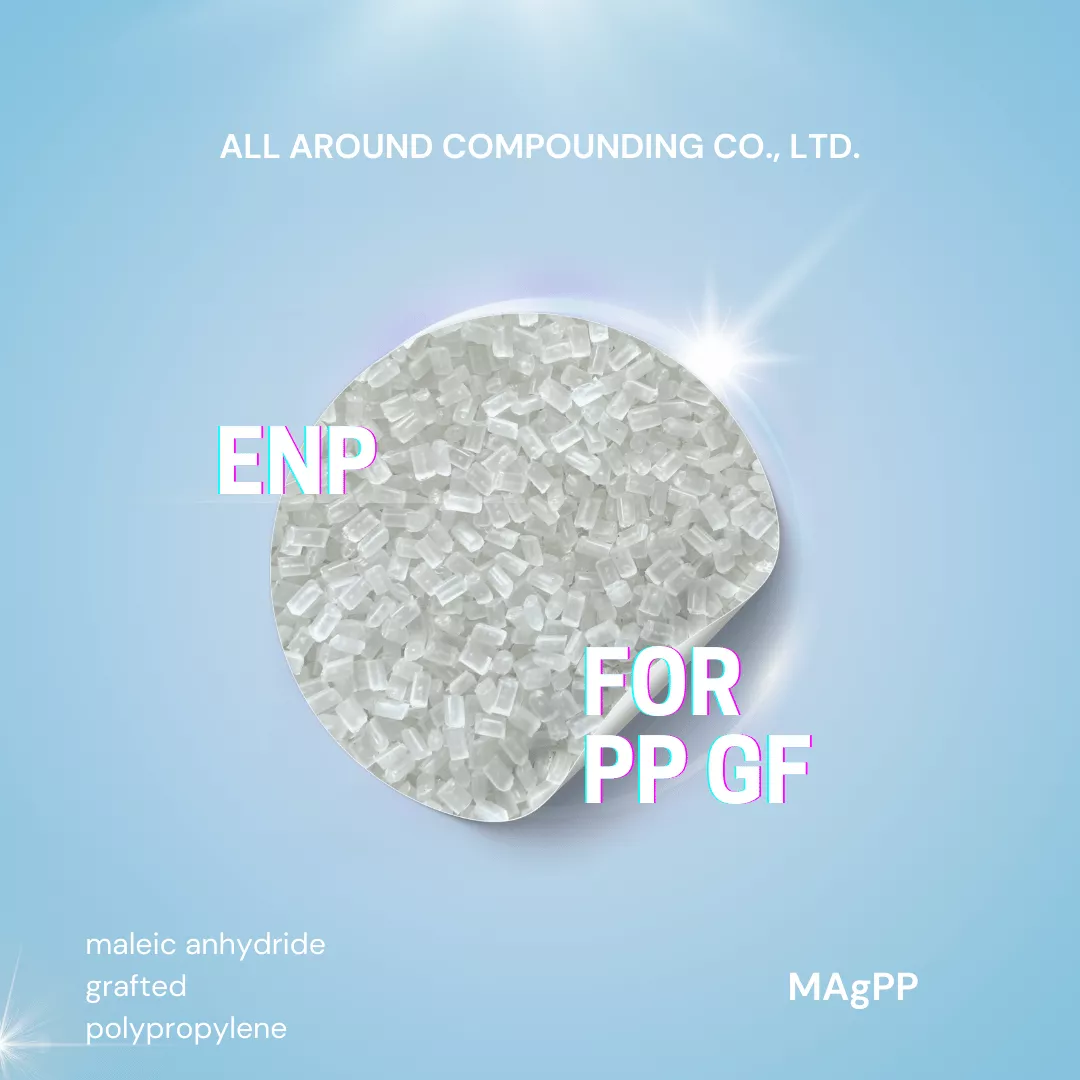
In practical applications, MAHgPP is often supplied as a ready-to-use compatibilizer in pellet form.
At All Around Polymer, this is offered under our product line ENP, a maleic anhydride grafted polypropylene designed for improved compatibility in PP-based systems.
ENP is specifically developed to enhance interfacial bonding between polypropylene and polar materials such as glass fiber, mineral fillers, or mixed polymer phases commonly found in recycled streams.
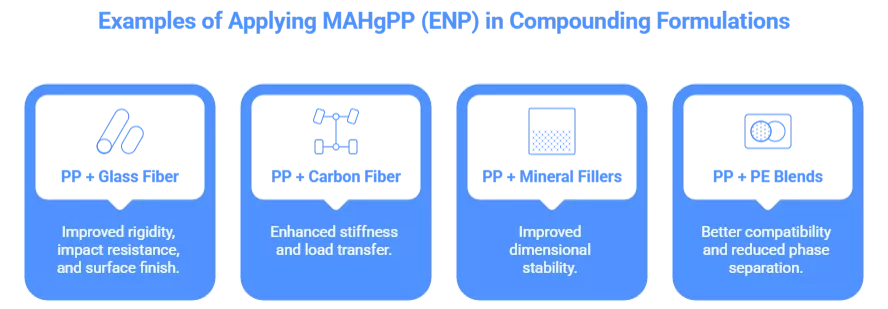
Examples of Applying MAHgPP (ENP) in Compounding Formulations
The actual improvement depends on formulation, processing conditions, and dispersion efficiency.
- PP + Glass Fiber: improved rigidity, impact resistance, and surface finish
- PP + Carbon Fiber: enhanced stiffness and load transfer
- PP + Mineral Fillers / Talc: improved dimensional stability
- PP + PE blends: better compatibility and reduced phase separation
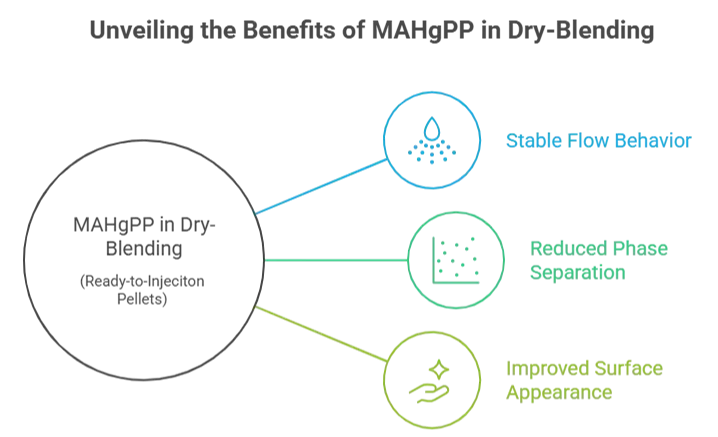
Application of MAHgPP (ENP) in Dry-Blending (Ready-to-Injection Pellets)
In dry-blended systems, MAHgPP can help improve melt homogeneity during processing.
This often leads to:
- More stable flow behavior
- Reduced phase separation
- Improved surface appearance (e.g., better gloss and fewer defects)
Performance Improvements You Can Expect with MAHgPP (ENP)
| Property | Without MAHgPP | With MAHgPP |
|---|---|---|
| Tensile Strength | Low / inconsistent | +30–80% improvement |
| Impact Resistance | Brittle | +20–60% improvement |
| Fiber Adhesion | Poor (pull-out) | Strong bonding |
| Process Stability | Variable | Consistent melt behavior and dispersion |
| Surface Appearance | Rough | Improved gloss |
Typical improvement: +30–70% overall mechanical performance
Engineering Note
Actual results depend on:
- Recycled content ratio
- Filler type and loading (e.g., GF, talc)
- Dispersion efficiency and compounding conditions
With improved interfacial adhesion and more stable mechanical performance, recycled PP systems can move closer to real engineering applications.
In some cases, this level of improvement also supports the use of plastics in more demanding environments, including scenarios traditionally considered for metal replacement applications.
When Does MAHgPP Become Critical?
MAHgPP becomes especially important when interfacial adhesion is the main reason for unstable or insufficient performance in PP-based systems.
You should strongly consider using MAHgPP when:
- Mechanical performance drops significantly after recycling
- Glass fiber reinforcement does not deliver the expected strength
- Material properties show high variation between batches
- PP is blended with other polymers such as PE
- Surface quality or gloss becomes inconsistent after processing
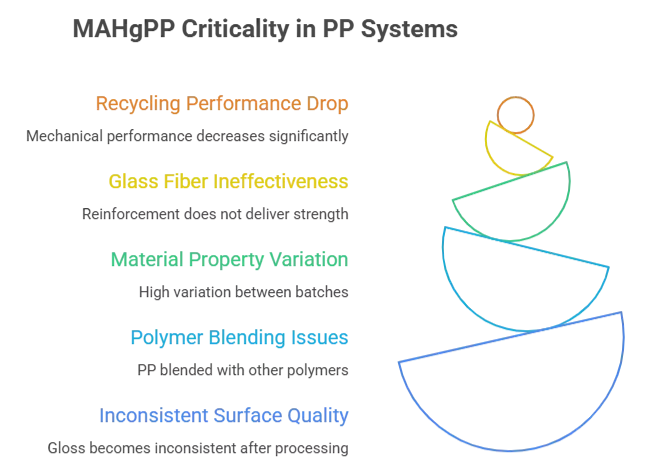
In short: MAHgPP is most valuable when the issue is not only the base resin, but the interface between different materials.
Why MAHgPP Matters in Recycled Polypropylene Systems
MAHgPP is widely used as a compatibilizer in recycled polypropylene systems to improve interfacial adhesion between non-polar PP and polar materials such as glass fiber, mineral fillers, or oxidized polymer surfaces.
Without proper compatibilization, recycled PP systems often fail to achieve stable mechanical performance, limiting their use in more demanding engineering applications.
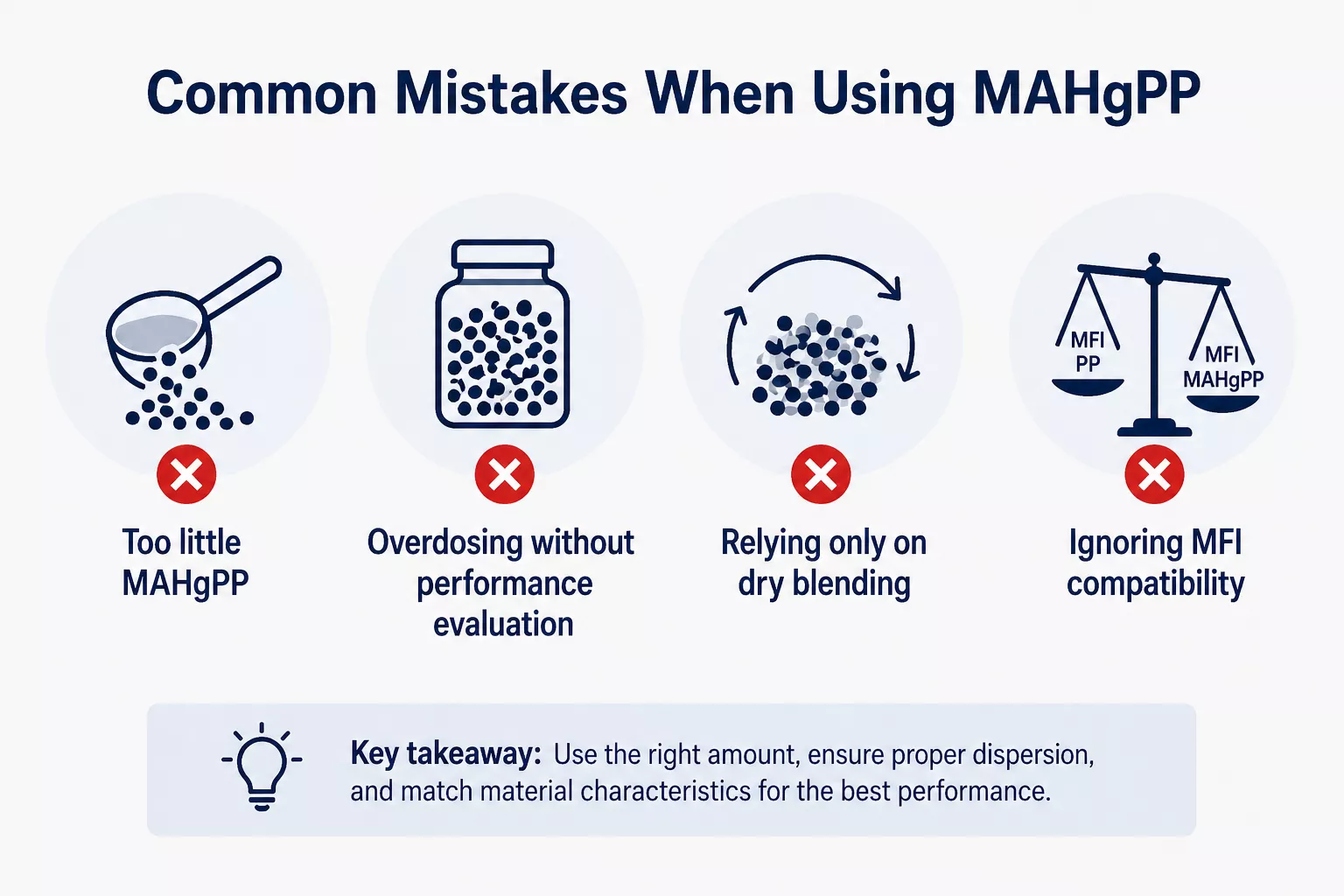
Common Mistakes When Using MAHgPP
- Using too little MAHgPP
Limited dosage may not provide enough interfacial improvement, especially in GF reinforced or recycled systems. - Overdosing without performance evaluation
Excessive MAHgPP can increase formulation cost without proportional performance gain. - Relying only on dry blending
Dry blending can be useful for quick trials, but dispersion may not be as uniform as melt compounding. - Ignoring MFI compatibility
Mismatch in melt flow index between MAHgPP and the base PP may affect dispersion and processing stability.
Recommended Dosage & Processing Considerations
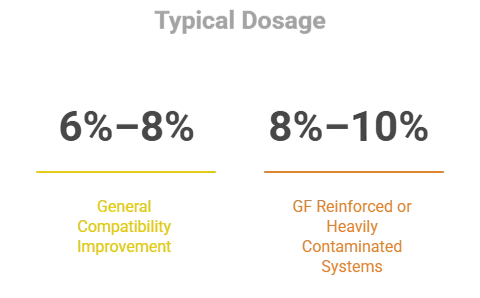
Typical Dosage
- 6%–8% → general compatibility improvement
- 8%–10% → for GF reinforced or heavily contaminated systems
Key Considerations
- Match MFI with base PP for better dispersion
- Avoid overdosing
- Ensure proper mixing
- Cost consideration: extra formulation with MAHgPP increases overall cost
Scenarios of using or not using MAHgPP (ENP)?
When Should You Use MAHgPP (ENP)?
MAHgPP (ENP) is especially effective in:
- Recycled PP + glass fiber systems
- PP / PE blends
- Reprocessed industrial scrap
- Applications requiring stable mechanical performance
When MAHgPP (ENP) May Not Be Necessary
MAHgPP may provide limited benefit in the following cases:
- Cost-driven PP compounds with minimal performance requirements
When the application does not require improved strength, toughness, or dimensional stability. - Unfilled PP systems without reinforcement, fillers, or compatibility challenges
For example, simple PP formulations where there is no need to improve bonding between PP and glass fiber, carbon fiber, mineral fillers, or other polymer phases. - Applications where mechanical performance is not the key requirement
If the main target is only low cost or basic molding performance, MAHgPP may not be essential.

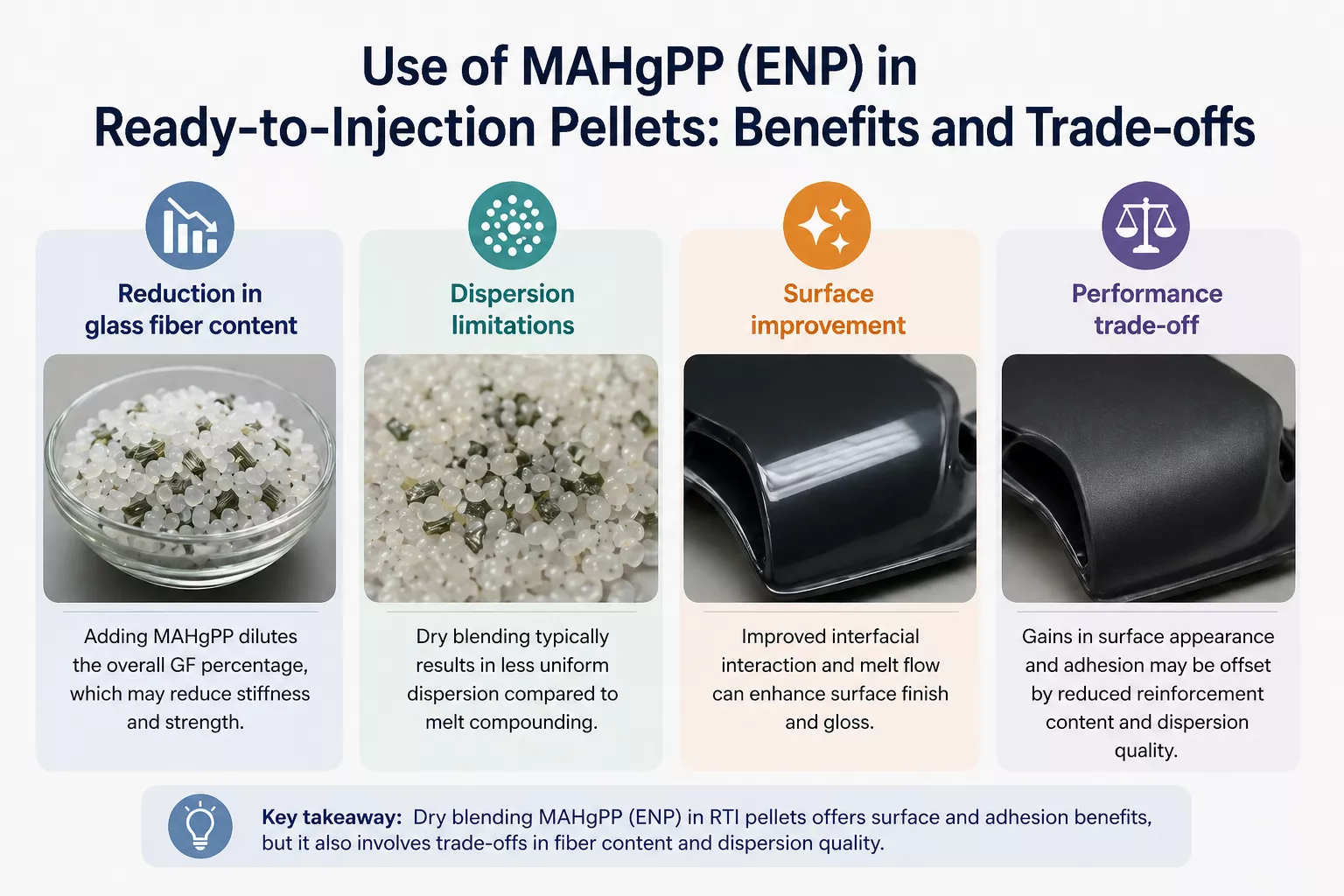
Use of MAHgPP (ENP) in Ready-to-Injection Pellets: Benefits and Trade-offs
MAHgPP can also be applied to ready-to-injection (RTI) pellets through dry blending. However, the following trade-offs should be considered:
- Reduction in glass fiber content
Adding MAHgPP dilutes the overall GF percentage, which may reduce stiffness and strength. - Dispersion limitations
Dry blending typically results in less uniform dispersion compared to melt compounding. - Surface improvement
Improved interfacial interaction and melt flow can enhance surface finish and gloss. - Performance trade-off
Gains in surface appearance and adhesion may be offset by reduced reinforcement content and dispersion quality.
FAQ of MAHgPP
What is MAHgPP used for?
It is used as a compatibilizer to improve adhesion between PP and polar materials such as glass fiber or fillers.
Can MAHgPP improve recycled plastic performance?
Yes. It restores interfacial bonding, which is one of the main causes of performance loss in recycled materials.
How much MAHgPP should I add?
Typically around 6–10%, depending on the system and performance requirements.
Does MAHgPP affect melt flow index (MFI)?
Yes. It can increase viscosity depending on dosage and formulation.
Is MAHgPP necessary for all recycled PP?
Not always, but it is highly recommended when mechanical performance or consistency is critical.
Conclusion: It's Not Just About Recycling—It's About Making It Work
Without proper compatibilization, recycled PP systems often fail to achieve stable mechanical performance, limiting their use in engineering applications.
Recycled PP is no longer just about cost reduction or sustainability. For many applications, it must meet real engineering requirements.
However, the biggest limitation is often not the material itself—but the interface. MAHgPP plays a critical role as a compatibilizer in recycled polypropylene systems, enabling improved interfacial adhesion, consistent mechanical performance, and broader application potential.
By introducing MAHgPP (ENP), manufacturers can significantly improve performance, consistency, and reliability—turning recycled PP into a viable engineering material.
Why Formulation Matters
In practice, achieving stable performance in recycled PP systems is rarely about adding a single material. It requires a combination of formulation experience, material understanding, and processing control.
For a closer look at how MAHgPP is developed and applied in real compounding scenarios, see: ENP MAgPP Strengths.
Need Support for Your Recycled PP Formulation?
If you are facing performance instability in recycled PP systems, we can help evaluate your formulation and recommend the right compatibilizer strategy.
At All Around Polymer, we understand that recycled materials are never "standard." Each system behaves differently depending on its source, formulation, and processing conditions.
We provide not only MAHgPP (ENP), but also practical formulation support and trial recommendations to help you achieve stable and durable results—all around the world. Contact us now for more details and support for your next project.
