
 Contact
LSC6
- PA12 CF30
- Colour: Black
- Reinforced with 30% Carbon Fiber
- Product Benefits: High dimensional stability, excellent impact strength, low moisture absorption, and good processability
- Certificate: RoHS, REACH
- Scroll down to download PDF version
30% Carbon Fiber Reinforced Nylon 12 (PA12 CF30)
Product Overview
PA12 CF30 (30% Carbon Fiber Reinforced Polyamide 12 / PA12+30 CF) is a high-performance engineering thermoplastic designed for applications requiring a combination of high stiffness, lightweight performance, low moisture absorption, and excellent dimensional stability.
The addition of 30% short carbon fiber significantly increases the rigidity and structural performance of PA12 while maintaining the inherent advantages of Nylon 12, including low water absorption, good chemical resistance, and reliable processing characteristics.
Compared with conventional glass fiber reinforced nylon, carbon fiber reinforcement provides an excellent strength-to-weight ratio, making PA12 CF30 particularly suitable for lightweight structural and precision components where both mechanical performance and weight reduction are important.
PA12 also absorbs significantly less moisture than PA6 and PA66, helping components maintain more consistent dimensions and mechanical properties under changing environmental conditions.
For more insights on Nylon 12 and other polyamide materials, see our guide: PA6 vs PA12: Key Differences .
Technical Specifications
-
Base Material: Nylon 12 (PA12 / Polyamide 12)
-
Carbon Fiber Content: 30%
-
Tensile Strength: 162 MPa
-
Elongation at Break: 3.6%
-
Notched Impact Strength (23℃): 22 kJ/m²
-
Density: 1.16 g/cm³
-
Melting Point: 178°C
-
Color Options: Black
Applications
PA12 CF30 is particularly suitable for applications requiring high stiffness, lightweight construction, low moisture absorption, and dimensional stability:
-
Defense & UAV Components: Lightweight structural frames, drone arms, sensor housings, camera or optical mounts, and equipment supports where high rigidity and reduced weight are critical.
-
Aerospace & Lightweight Structures: Structural brackets, equipment housings, mounting components, and other lightweight parts requiring dimensional accuracy and stable mechanical performance.
-
Robotics & Precision Equipment: Robotic end effectors, gripper components, precision housings, mechanical supports, and moving components where low weight helps reduce inertia while maintaining rigidity.
-
Fluid Handling & Harsh-Environment Components: Pump housings, valve components, connectors, sensor housings, and structural parts exposed to fuels, oils, moisture, or industrial chemicals.
Why Choose PA12 CF30?
| Property | PA12 CF30 Advantage |
| Stiffness | High rigidity from 30% carbon fiber reinforcement |
| Weight | High strength-to-weight ratio for lightweight component design |
| Moisture Absorption | Low moisture absorption compared with PA6 and PA66 |
| Dimensional Stability | Excellent stability for precision and structural components |
| Chemical Resistance | Good resistance to oils, fuels, greases, and many industrial chemicals |
| Processing | Good injection molding processability with appropriate processing conditions |
For applications focused on lightweight structural performance and metal replacement, see our guide: Top Plastics for Metal Replacement .
Application Examples
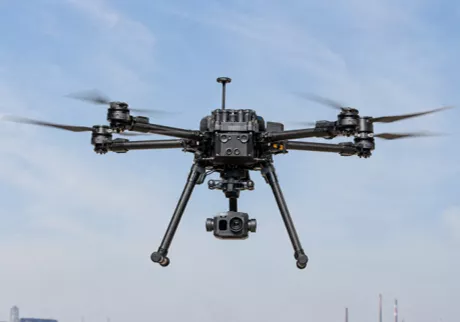
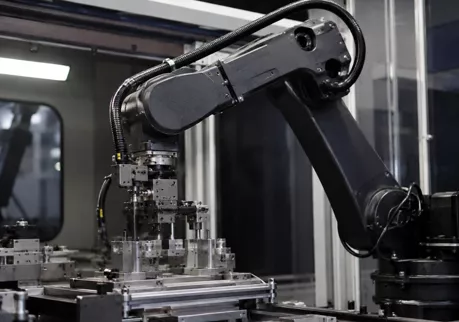
PA12 CF30 is a suitable material solution for lightweight structural and precision components where high stiffness, low moisture absorption, chemical resistance, and dimensional stability are required.
Frequently Asked Questions about PA12 CF30
- What is PA12 CF30?
PA12 CF30 is Nylon 12 reinforced with 30% short carbon fiber. Carbon fiber reinforcement increases the stiffness and structural performance of PA12 while maintaining its low moisture absorption, chemical resistance, and dimensional stability. - What are the main advantages of PA12 CF30?
Its main advantages include high stiffness, lightweight performance, low moisture absorption, excellent dimensional stability, good chemical resistance, and good processability. These characteristics make it particularly suitable for precision and lightweight structural applications. - How does PA12 CF30 differ from PA12 GF30?
PA12 CF30 uses carbon fiber rather than glass fiber as reinforcement. Carbon fiber is particularly advantageous when higher stiffness and a better strength-to-weight ratio are required, while glass fiber reinforced PA12 can be a more cost-effective solution for general structural applications. - How does PA12 CF30 compare with PA6 or PA66 carbon fiber compounds?
PA12 generally absorbs less moisture than PA6 and PA66, providing better dimensional stability under changing humidity conditions. PA6 and PA66 may offer advantages where higher temperature resistance or different mechanical performance is required. - Where is PA12 CF30 commonly used?
Typical applications include lightweight automotive components, precision mechanical parts, industrial housings, sporting equipment, bicycle components, brackets, supports, and other structural components requiring high stiffness and dimensional stability. - Can PA12 CF30 be used for metal replacement?
Yes. PA12 CF30 can be considered for selected metal replacement applications where reduced weight, high stiffness, corrosion resistance, and dimensional stability are important design requirements. - Is PA12 CF30 easy to process?
PA12 CF30 provides good injection molding processability for a carbon fiber reinforced engineering plastic. Proper material drying, melt temperature, mold temperature, and fiber-friendly molding conditions are recommended to achieve consistent part quality and mechanical performance. - What are the limitations of PA12 CF30?
Although PA12 CF30 provides excellent stiffness-to-weight performance and dimensional stability, material selection should also consider operating temperature, impact requirements, surface appearance, electrical properties, and cost. PA6, PA66, or glass fiber reinforced grades may be more suitable depending on the application.
| Properties | Test Method | Units | Conditions | Value |
|---|---|---|---|---|
| Density | ISO 1183 | g/cm3 | Dry | 1.16 |
| Tensile strength at break | ISO 527 (50mm/min) |
MPa | Dry | 162 |
| Flexural strength | ISO178 | MPa | Dry | 238 |
| Flexural modulus | ISO 178 | MPa | Dry | 16000 |
| Elongation at break | ISO 527 (50mm/min) |
% | Dry | 3.6 |
| Impact strength | ISO 180-1C Charpy,23℃ |
kJ/㎡ | Dry | 67 |
| Notched impact strength | ISO 180-1A Charpy,23℃ |
kJ/㎡ | Dry | 22 |
| Melting point | ISO 3146C DSC | ℃ | Dry | 178 |
| Heat deflection temperature HDT/A | ISO 75 1.8MPa |
℃ | Dry | 168 |
