
 Contact
PA and ABS are both widely used thermoplastics in injection molding, but they are generally selected for different types of components.
ABS is usually preferred for visible parts that require good surface appearance, dimensional stability, and easier processing. PA is more suitable for structural and mechanical components that require strength, wear resistance, heat resistance, or long-term durability.
The right material therefore depends on the function of the molded part rather than on which polymer is generally considered "better."
This article compares PA and ABS in terms of material properties, injection molding behavior, and practical applications to help molders and product designers choose the appropriate material.
What are PA and ABS?
PA: A Material for Functional and Structural Components
PA stands for polyamide and is commonly known as nylon.
Common PA materials used in injection molding include:
- PA6
- PA66
- PA12
- Glass-fiber-reinforced PA
- Mineral-filled PA
- Hybrid glass/mineral-filled PA
- Impact-modified PA
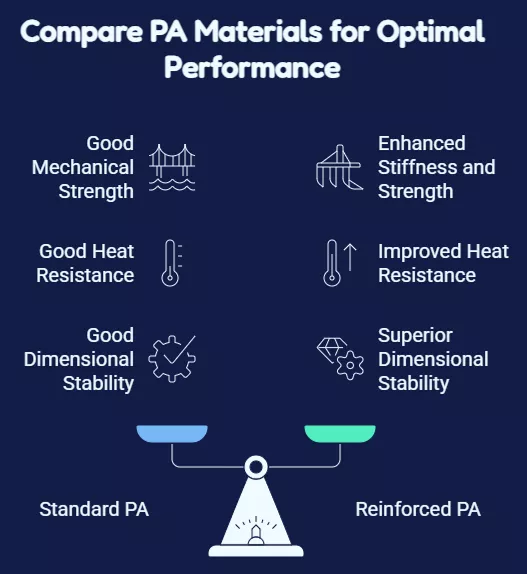
PA is known for its mechanical strength, wear resistance, fatigue resistance, chemical resistance, and heat resistance. It is commonly used for components such as gears, brackets, clips, bushings, connectors, and other parts that must perform a mechanical function.
Glass-fiber reinforcement can further improve the stiffness, strength, heat resistance, and dimensional stability of PA. Grades such as PA6 GF30 and PA66 GF30 are frequently selected for load-bearing components and metal replacement applications.
ABS: A Material for Housings and Appearance Parts
ABS stands for acrylonitrile butadiene styrene.
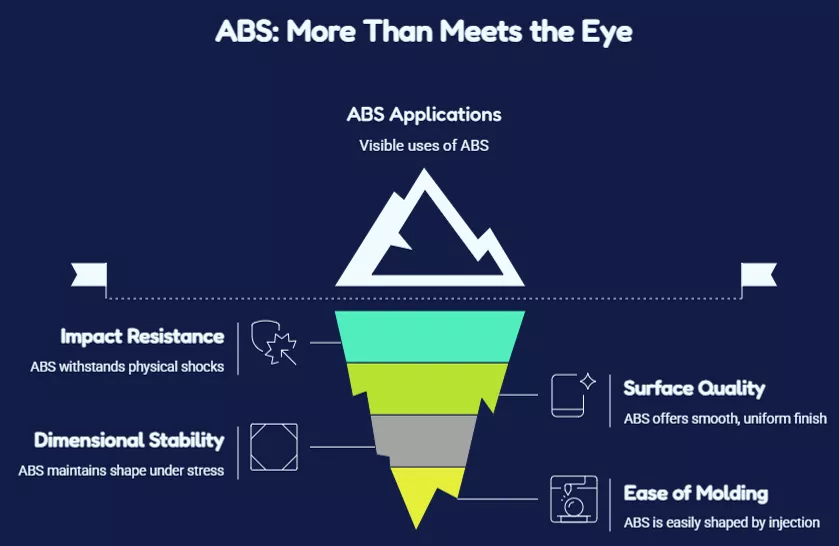
It is an amorphous thermoplastic known for its impact resistance, surface quality, dimensional stability, and ease of injection molding.
ABS is commonly used for:
- Home appliance housings
- Electronic enclosures
- Control panels
- Tool housings
- Toys
- Automotive interior trim
- Decorative consumer-product parts
ABS can reproduce mold textures well and usually provides a smooth, uniform surface. High-flow, high-impact, heat-resistant, and plating-grade ABS materials are also available for different product requirements.
PA vs ABS Property Comparison
| Property | PA | ABS |
|---|---|---|
| Polymer Structure | Semi-crystalline | Amorphous |
| Mechanical Strength | Generally higher | Moderate |
| Stiffness | Moderate to high, depending on reinforcement | Moderate |
| Wear Resistance | Excellent | Limited |
| Fatigue Resistance | Good | Moderate |
| Heat Resistance | Higher | Moderate |
| Chemical Resistance | Good resistance to oils and many chemicals | More sensitive to some solvents |
| Moisture Absorption | Relatively high | Relatively low |
| Dimensional Stability | Affected by moisture and crystallization | Generally easier to control |
| Surface Appearance | Moderate | Generally smooth and glossy |
| Injection Molding | Requires tighter process control | Generally easier |
| Typical Use | Structural and mechanical components | Housings and appearance parts |
These are general differences. Actual performance depends on the selected grade, reinforcement level, additives, product design, and molding conditions.
Key Differences Between PA and ABS
1. Structural Strength and Load-Bearing Performance
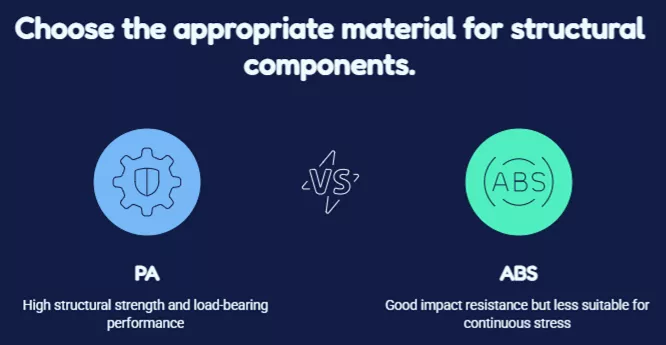
PA is generally more suitable than ABS for parts that must withstand continuous loads, screw-fastening forces, bending stress, vibration, or repeated mechanical movement.
Typical applications include:
- Motor brackets
- Automotive mirror brackets
- Power-tool internal supports
- Furniture structural components
- Industrial equipment parts
- Metal replacement components
Glass-fiber-reinforced PA provides higher stiffness and strength than unreinforced PA and is frequently used when a plastic part must carry a mechanical load.
ABS provides good impact resistance, but it is generally less suitable for components exposed to continuous stress or elevated operating temperatures. For parts with screw bosses, cantilever structures, or long-term loading, creep and heat deformation should be carefully evaluated before selecting ABS.
2. Surface Appearance and Dimensional Control
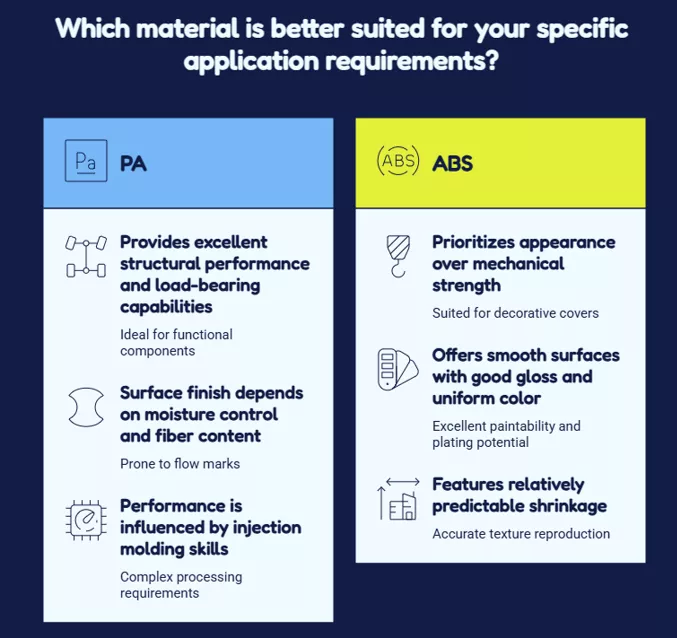
ABS is generally more suitable for visible housings and appearance-sensitive components.
It offers:
- Smooth molded surfaces
- Good gloss
- Uniform color
- Accurate texture reproduction
- Good paintability
- Good plating potential
- Relatively predictable shrinkage
These characteristics make ABS suitable for thin-wall housings, decorative covers, and high-volume consumer products.
Glass-fiber-reinforced PA can provide excellent structural performance, but its molded surface may depend on moisture control, fiber contents, flow marks, or injection molding skills. When appearance is more important than mechanical strength, ABS is usually the more practical choice.
3. Wear, Friction, and Repeated Movement
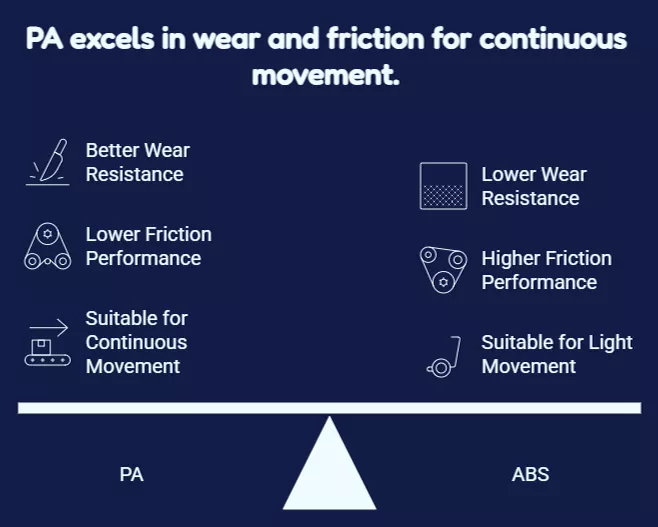
PA provides better wear resistance and friction performance than general-purpose ABS.
It is therefore commonly used for components that slide, rotate, or repeatedly contact other parts, such as:
- Gears
- Bushings
- Pulleys
- Guide rails
- Hinges
- Rollers
- Conveyor-system components
ABS may be suitable for lightly loaded or short-term moving components, but it is generally not recommended for continuously operating contact surfaces. Long-term friction may lead to wear, increased noise, or dimensional changes.
4. Heat and Chemical Resistance
PA6 and PA66 generally provide better heat resistance than standard ABS, especially when reinforced with glass fiber.
PA is commonly selected for parts exposed to:
- Heat generated by electric motors
- Elevated machinery temperatures
- Automotive under-hood conditions
- Continuous electrical heating
- Oil, grease, or automotive fluids
- Long-term mechanical loads at higher temperatures
Typical applications include motor brackets, electrical connectors, clips, mechanical supports, and industrial components.
Heat-resistant ABS grades are available, but their long-term operating temperature, heat deflection temperature, and creep performance should be checked using the specific material data sheet.

5. Moisture Absorption
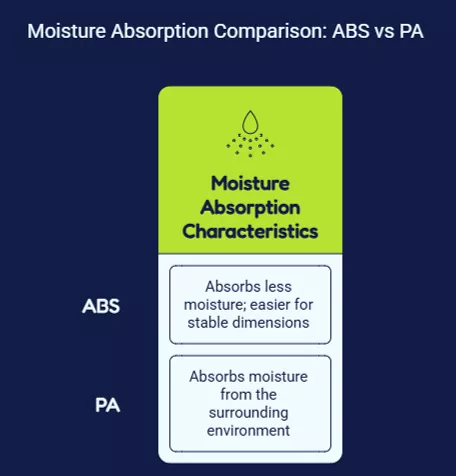
ABS absorbs less moisture than PA and is generally easier to use for products requiring stable dimensions.
PA absorbs moisture from the surrounding environment. Moisture conditioning can affect:
- Dimensions
- Stiffness
- Tensile strength
- Toughness
- Assembly tolerances
- Electrical properties
PA parts should therefore be evaluated under the moisture conditions expected during actual use, rather than only under dry laboratory conditions.
When PA is required but lower moisture absorption is important, possible options include PA12, reinforced PA, mineral-filled PA, or specially developed low-moisture formulations.
PA vs ABS Injection Molding Differences
From an injection molding perspective, ABS is generally easier to process. PA can offer higher functional performance, but it requires tighter control of drying, mold temperature, shrinkage, and material flow.
1. Drying and Material Handling
PA absorbs moisture from the air more easily than ABS.
If PA is not dried properly before molding, possible defects include:
- Silver streaks
- Bubbles
- Flash
- Poor surface quality
- Reduced melt viscosity
- Lower mechanical performance
PA should be dried according to the material supplier's recommendations and protected from moisture after drying. If dried material remains in an open hopper for a long period, it may absorb moisture again and require additional drying.
ABS should also be dried, especially when producing high-gloss or visible parts. However, it is generally less sensitive to moisture than PA.
2. Processing Window
ABS generally has a broader and more forgiving processing window.
Compared with PA, ABS usually offers:
- Easier temperature control
- More predictable shrinkage
- Lower warpage risk
- Easier dimensional control
- More consistent surface appearance
This makes ABS relatively easy to introduce into mass production for housings, covers, and consumer-product parts.
PA is semi-crystalline, so its molding behavior is more sensitive to melt and mold temperature. An unsuitable mold temperature can affect crystallization, shrinkage, surface quality, mechanical performance, and cycle time.
3. Shrinkage and Warpage
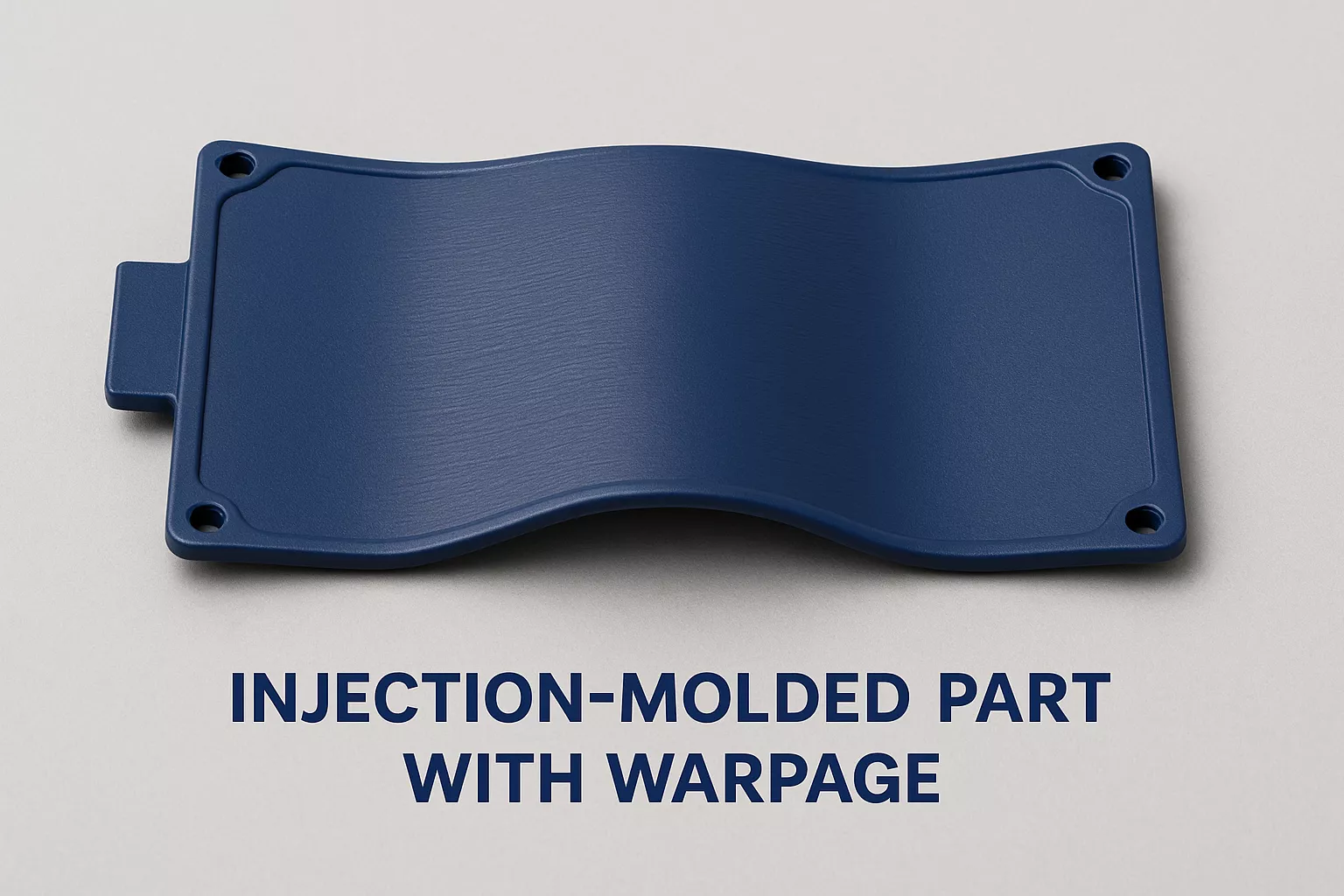
Glass-fiber-reinforced PA requires careful control of material flow and part geometry.
During injection molding, glass fibers tend to align with the melt-flow direction. This can create different shrinkage rates in different directions and increase the risk of warpage.
Important factors include:
- Gate position
- Wall-thickness consistency
- Rib direction
- Fiber-flow direction
- Weld-line location
- Cooling balance
For large, flat, or dimensionally sensitive parts, mineral-filled or hybrid glass/mineral-filled PA may offer more balanced shrinkage than glass-fiber-only PA.
ABS generally provides more predictable shrinkage because it is amorphous and is not strongly affected by crystallization.
4. Surface Appearance
ABS is usually easier to mold into parts with:
- Smooth surfaces
- High gloss
- Uniform color
- Fine textures
- Painted finishes
- Plated finishes
Glass-fiber-reinforced PA may show exposed fibers, flow marks, haze, or uneven gloss.
When a PA part requires both structural strength and good appearance, the result can be improved through material formulation (such as PA6-nanocomposite, mold-temperature control, gate design, injection speed, and mold-surface quality.
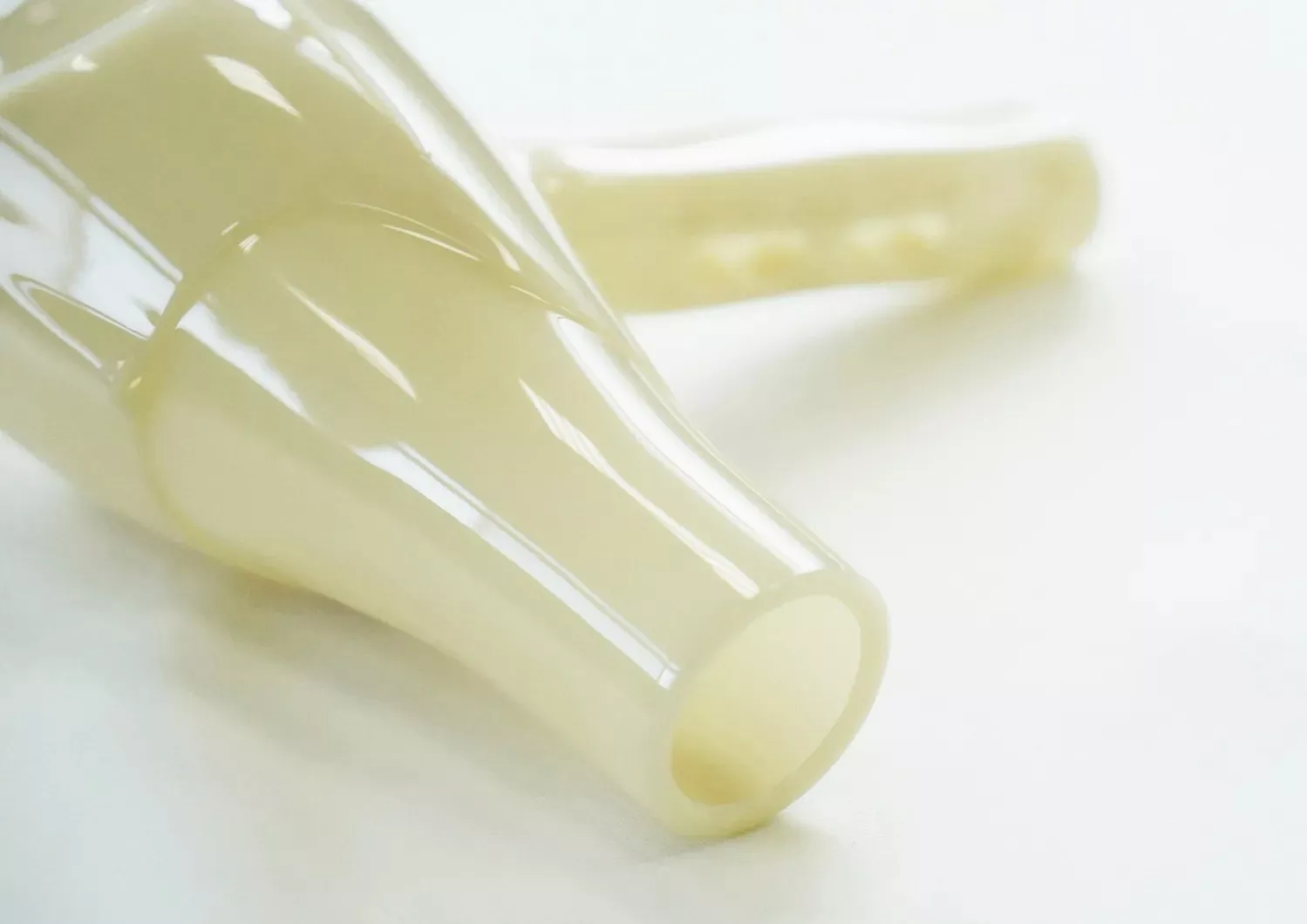
Injection molded part with PA6 nanocomposite materials can perform glossy surface.
Practical Application Examples
PA and ABS are often used in the same finished product, but they serve different functions.
A simple rule is:
- ABS is used for visible housings, covers, and decorative parts.
- PA is used for structural supports, moving parts, and components exposed to heat or mechanical loads.
Home Appliances
ABS is commonly used for visible appliance parts because it offers good surface quality, dimensional stability, and efficient processing.
Typical applications include:
- Vacuum-cleaner housings
- Coffee-machine covers
- Fan housings
- Control panels/ Remoters
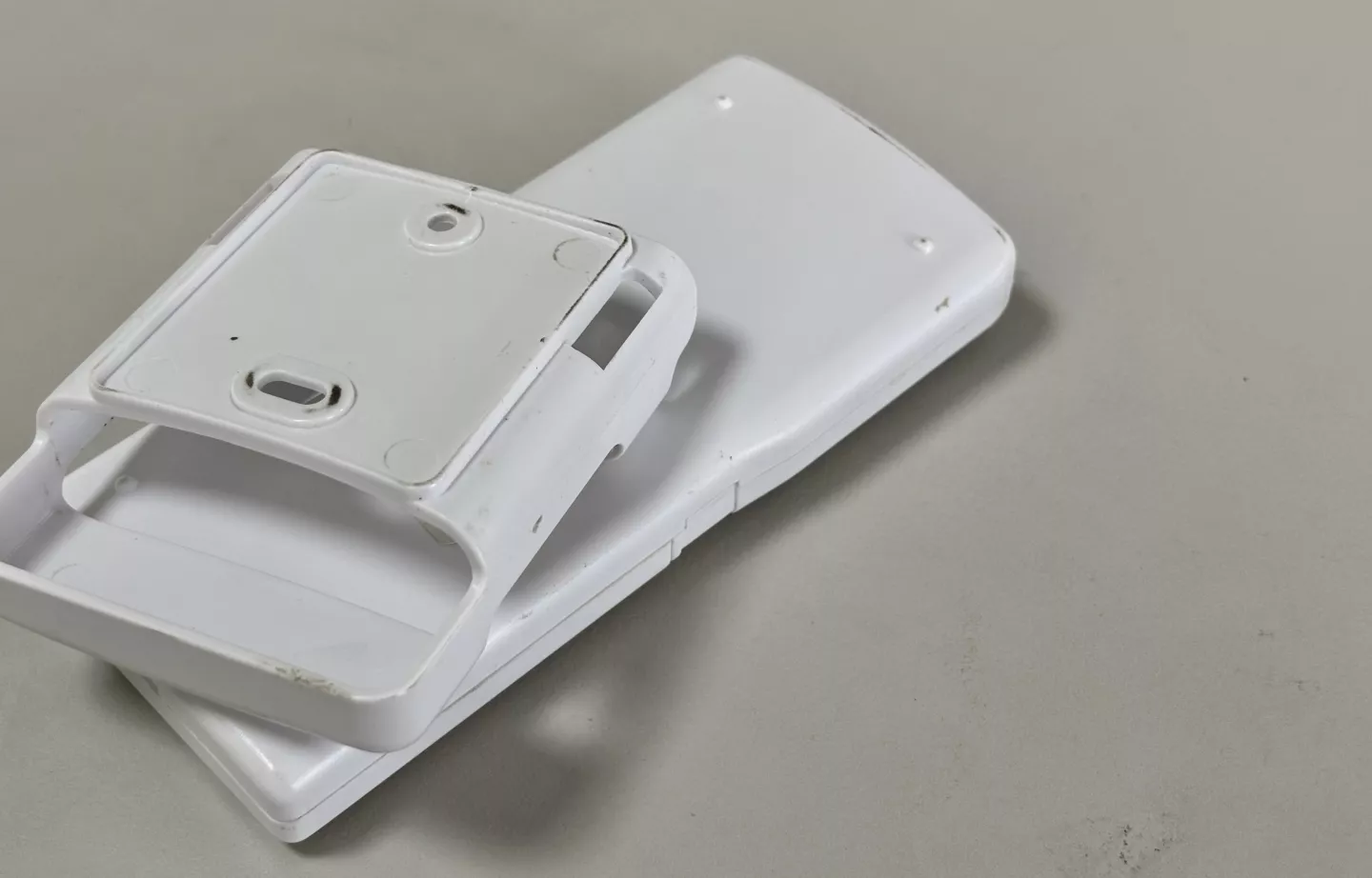
PA may be used for internal parts that carry loads, support motors, resist wear, or operate near heat.
Examples include:
- Motor mounts
- Gears
- Clips
- Bearing supports
- Internal structural components
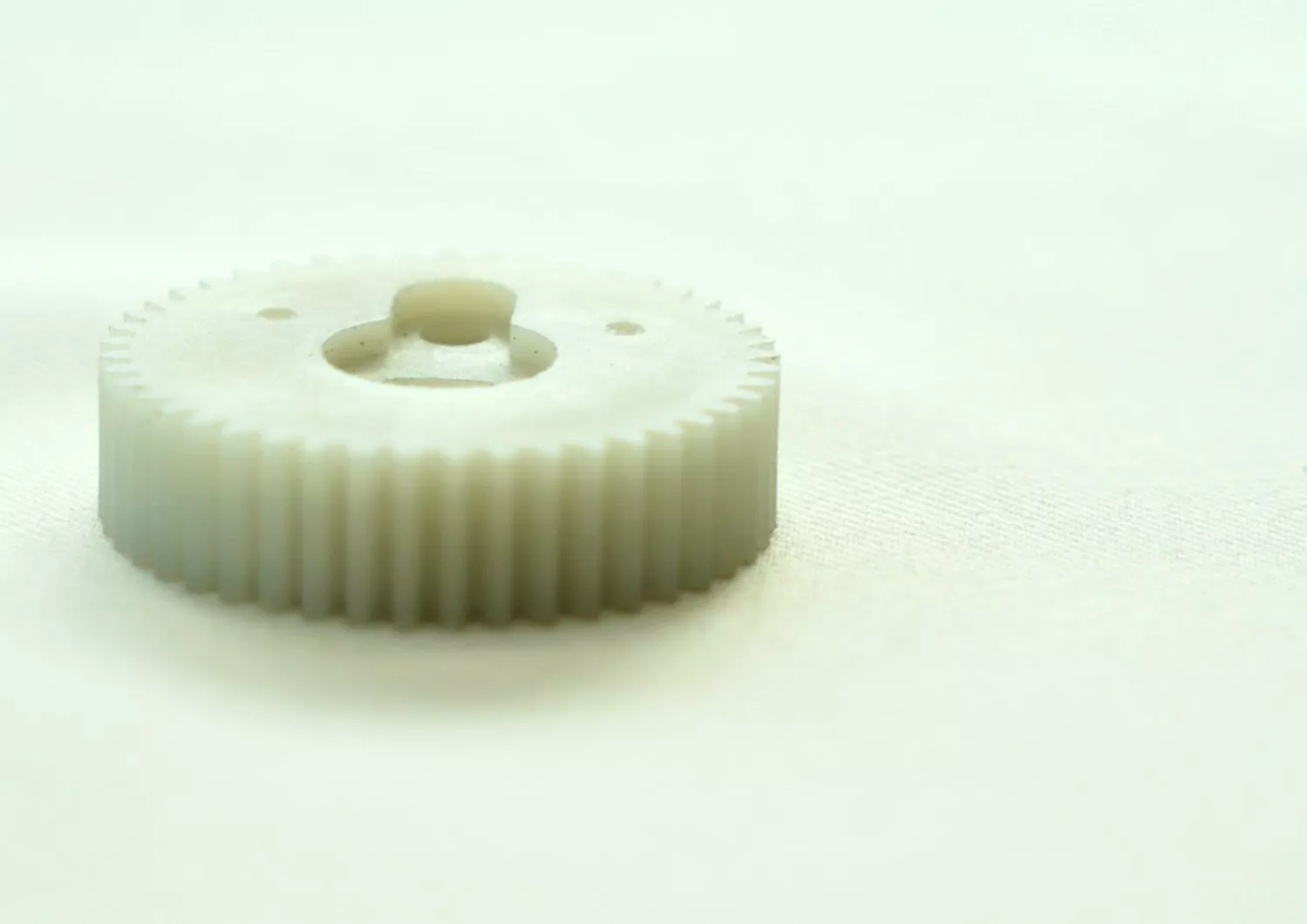
Automotive Components
ABS and PA are both widely used in automotive products, but they are generally selected for different areas.
| ABS Applications | PA Applications |
|---|---|
| Interior trim | Mirror brackets |
| Control panels | Wire-harness clips |
| Decorative covers | Electrical connectors |
| Plated appearance parts | Gears, motor brackets, and engine-compartment components |
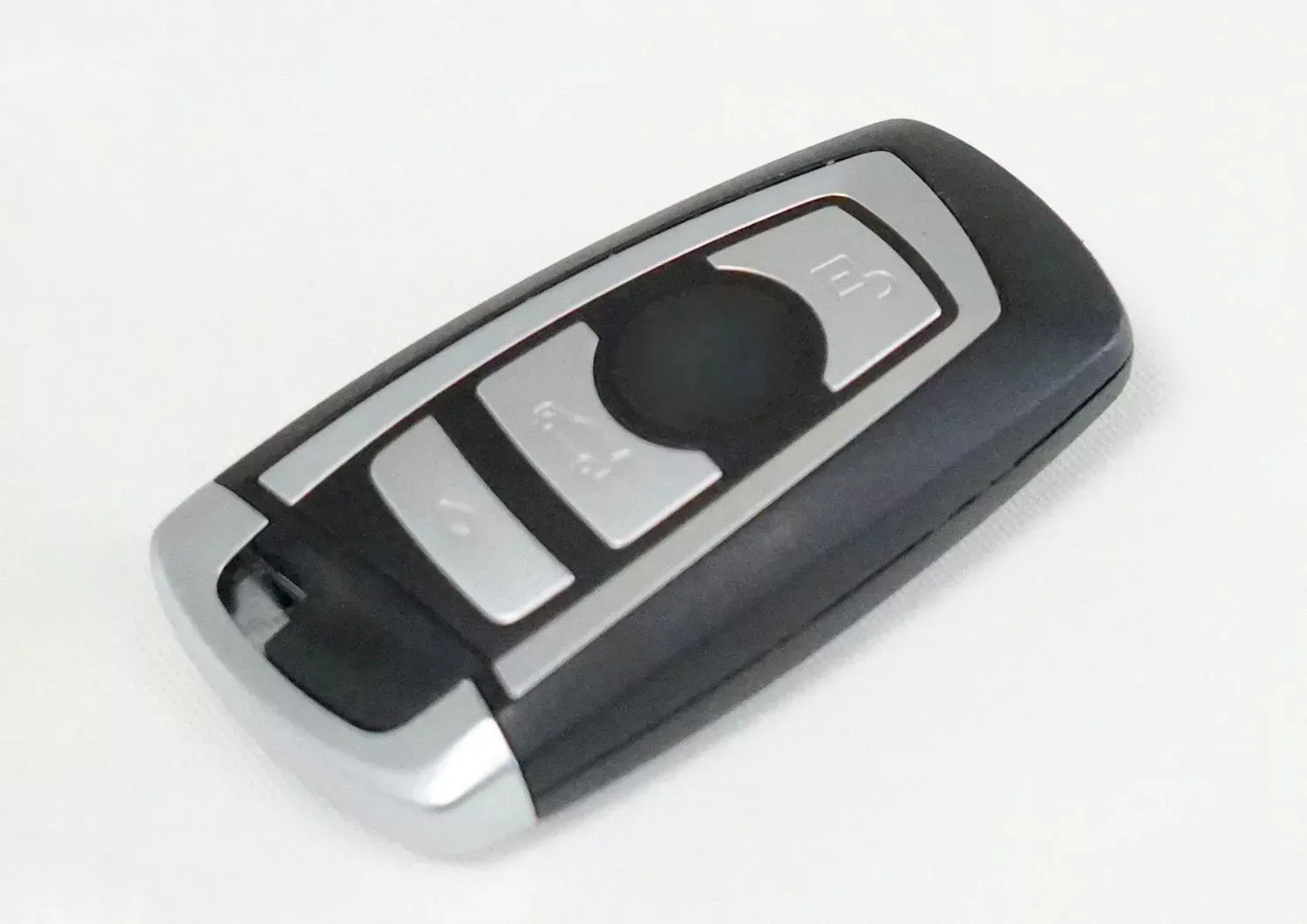
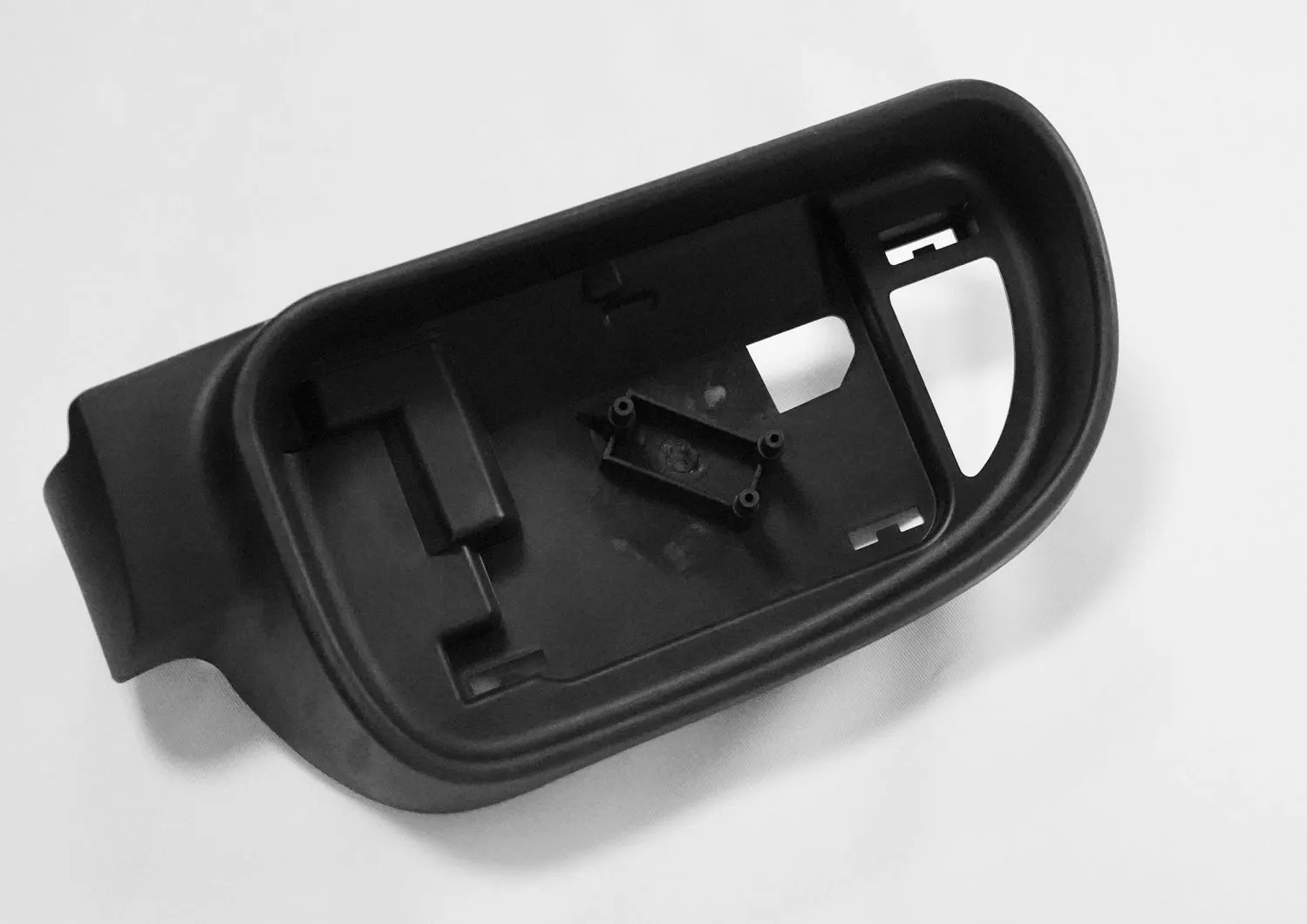
ABS is usually selected for appearance and interior surfaces, while PA is selected for strength, heat resistance, vibration resistance, and long-term mechanical performance.
For exterior parts, UV resistance and weatherability should also be evaluated. Standard ABS may require stabilization, coating, or replacement with a weather-resistant material such as ASA.
How to Choose Between PA and ABS
The material should be selected according to the main function of the molded part.
Choose ABS When the Part Requires:
- Smooth surface appearance
- High gloss
- Uniform color
- Painting or electroplating
- Thin-wall molding
- Stable dimensions
- Easier injection molding
- Efficient mass production
Typical ABS applications include housings, covers, panels, interior trim, and decorative components.
Choose PA When the Part Requires:
- Higher mechanical strength
- Load-bearing performance
- Screw-fastening strength
- Wear resistance
- Repeated movement
- Heat resistance
- Oil or chemical resistance
- Long fatigue life
- Metal replacement
Typical PA applications include gears, brackets, clips, motor supports, mechanical parts, and automotive components.
PA vs ABS Quick Selection Guide
| Product Requirement | Recommended Material |
|---|---|
| High-gloss housing | ABS, Nylon-6 Nanocomposite |
| Electronic enclosure | ABS |
| Painted or plated component | ABS |
| Thin-wall consumer product | High-flow ABS |
| Gear or sliding component | Reinforced PA |
| Wear-resistant component | Reinforced PA |
| Motor or structural bracket | Reinforced PA |
| Heat-exposed component | Reinforced PA |
| Metal replacement | High-glass-fiber PA |
| Flat structural part with improved surface quality | Mineral-filled or hybrid-filled PA |
| Low-moisture nylon application | PA12 or low-moisture PA |
The selection rule can be summarized simply: Use ABS for appearance and processing efficiency. Use PA for strength, wear resistance, heat resistance, and mechanical loads.
Frequently Asked Questions
Which Material Has Better Impact Resistance?
ABS generally offers good room-temperature impact resistance and is commonly used for housings and consumer products.
The impact resistance of PA depends more strongly on the PA type, moisture condition, reinforcement level of impact modifier, and test temperature.
For this reason, material selection should be based on the actual requirement, such as drop impact, low-temperature impact, or notched impact.
Which Material Is More Cost-Effective?
General-purpose ABS is usually less expensive than reinforced or specially modified PA.
However, the total cost of a molded component may also include:
- Drying and processing
- Cycle time
- Scrap rate
- Assembly requirements
- Product lifetime
- Replacement or warranty cost
- The possibility of replacing metal
ABS is often more cost-effective for low-load housings, while PA may provide better overall value for functional components requiring strength, durability, or longer service life.
Conclusion: Choose ABS for Appearance and PA for Performance
PA and ABS are designed for different injection molding requirements.
ABS is generally more suitable for housings, covers, and visible components that require good surface appearance, dimensional stability, and easier processing.
PA is usually the better choice for gears, brackets, clips, structural supports, and components that require strength, wear resistance, heat resistance, or long-term mechanical performance.
If an existing ABS component is failing because of deformation, insufficient strength, heat, wear, or screw-boss cracking, PA or glass-fiber-reinforced PA may provide better performance.
If an existing PA part has excessive warpage, poor surface appearance, or unnecessary mechanical performance, a mineral-filled, hybrid-filled, low-moisture, or otherwise modified PA formulation may provide a better balance.
Need Help Selecting the Right PA Material?
Our team can evaluate whether standard PA, reinforced PA, mineral-filled PA, impact-modified PA, or another customized formulation or materials types is more suitable for your application.
Contact us to request a material recommendation, technical data sheet, or trial sample for your injection molding project.
